Journal
2026-08-24 · 4 minStarting a perfume shop: what comes first
Assortment logic, sampling discipline, staff who can describe a smell, light and storage — the decisions that keep a perfume shop alive past year one.
Most people opening a perfume shop start with the décor: lighting, marble, shelving, signage. Then, after opening, they discover that the customer remembers none of it, and remembers instead that the assistant could not describe a fragrance and that the scent they tried had vanished within two hours. A shop that works is built from the inside out: sourcing first, then people, then furniture.
The first real decision is assortment logic. The practical rule is to begin with a small number of names your customer already knows — fragrances like Giorgio Armani or Prada L'Homme are examples of the language people walk in speaking — and then build your distinctive choices around them. Familiar names explain what the shop is; the other choices are what bring someone back. The common error runs the other way: an enormous range in month one, with capital frozen in bottles that never move.
Before any of that comes a question many skip: who is your customer? A shop in a residential street lives on repeat faces and honest advice, while a unit in a busy retail corridor lives on quick decisions and ready-wrapped gifts. Climate enters the equation too — in long heat, citrus and dry woods move during the day while heavy ambers belong to the evening. Sit in your chosen location for a week and watch who passes before fixing your range. That observation is much cheaper than the wrong stock.
Then come samples. Testing is the real inventory of a perfume shop. A customer who cannot smell will not buy, and a customer who smells ten fragrances in a row will not buy either, because the nose fatigues. Teach your team to present three at most, to space them out, and to leave one on skin with an invitation to come back in half an hour. That simple habit lifts conversion and cuts returns. Small samples to take away are a sales tool rather than an expense: someone who tries a scent for three days returns with a decision instead of hesitation.
Shelf arrangement is a selling decision as well. Organising by olfactory family — citrus, floral, woody, ambery — helps a customer reach what they like faster than organising by brand, and it lets them cross between the men's and women's sections without embarrassment. Leave space between bottles, too. A crowded shelf looks cheap and makes choosing harder.
The people behind the counter are the second difference. An assistant who says “this one is nice” does not sell. An assistant who says “this opens citric and then settles into warm wood, it lasts around six hours, and it suits daytime better than evening” does. Train your team on olfactory families, on the distinction between longevity and projection, and on asking what the customer wears now before recommending anything.
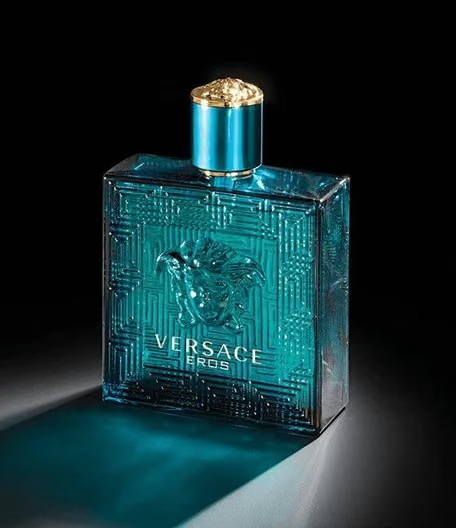
Then storage. Direct light fades colour and alters smell, and heat accelerates oxidation. Do not put real bottles in a sunlit window; use empty display cartons and keep the goods somewhere dark and stable. Watch stock rotation as well, because a bottle that has sat under bright lighting for two years is not the bottle that arrived.
Seasonal rhythm deserves planning. A large share of perfume sales are gifts, and a gift is bought on a different logic from a personal purchase: faster, with less testing, leaning on the name and the packaging. Prepare your team to ask who the gift is for rather than which perfume they want, and prepare presentable wrapping. In other seasons customers return to buying for themselves, and that is when long testing and take-away samples earn their keep.
Sourcing is the decision that determines everything above it. If you cannot say where you buy from, your customer will invent an answer, and it will be worse than the truth. Ask your supplier about authenticity, about packaging condition, and about what happens when something is short. Build a relationship with a person who replies rather than an account that sends lists. There is a longer note on the mistakes new buyers make and another on designer and niche.
Finally, read about the names before you commit to them. Fragrantica gives you launch years, note pyramids and a fragrance's reputation for performance, which is often enough to know whether a recommendation actually suits your climate and your customer. And treat your own numbers calmly: watch what turns quickly and what sits for months, and allow yourself to drop a choice that did not work rather than defending it. Décor photographs well, but the range and the team are what carry a shop into its second year.
We are a perfume trading company in Dubai, working since 2012. If you would like to talk through the start of your shop with people, Ahmad and Khaled are on WhatsApp, or use the contact form.