Journal
2026-08-23 · 5 minMistakes new perfume buyers still make
Buying from a screenshot, judging from paper strips, confusing concentration with strength, storing badly — ten errors that cost new buyers real money.
Most mistakes in buying perfume repeat themselves so reliably that they look almost systematic, and most of them are procedural rather than a failure of taste. Knowing them in advance saves money, time and disappointment. Here are the ones that come up most often, roughly in the order they tend to happen.
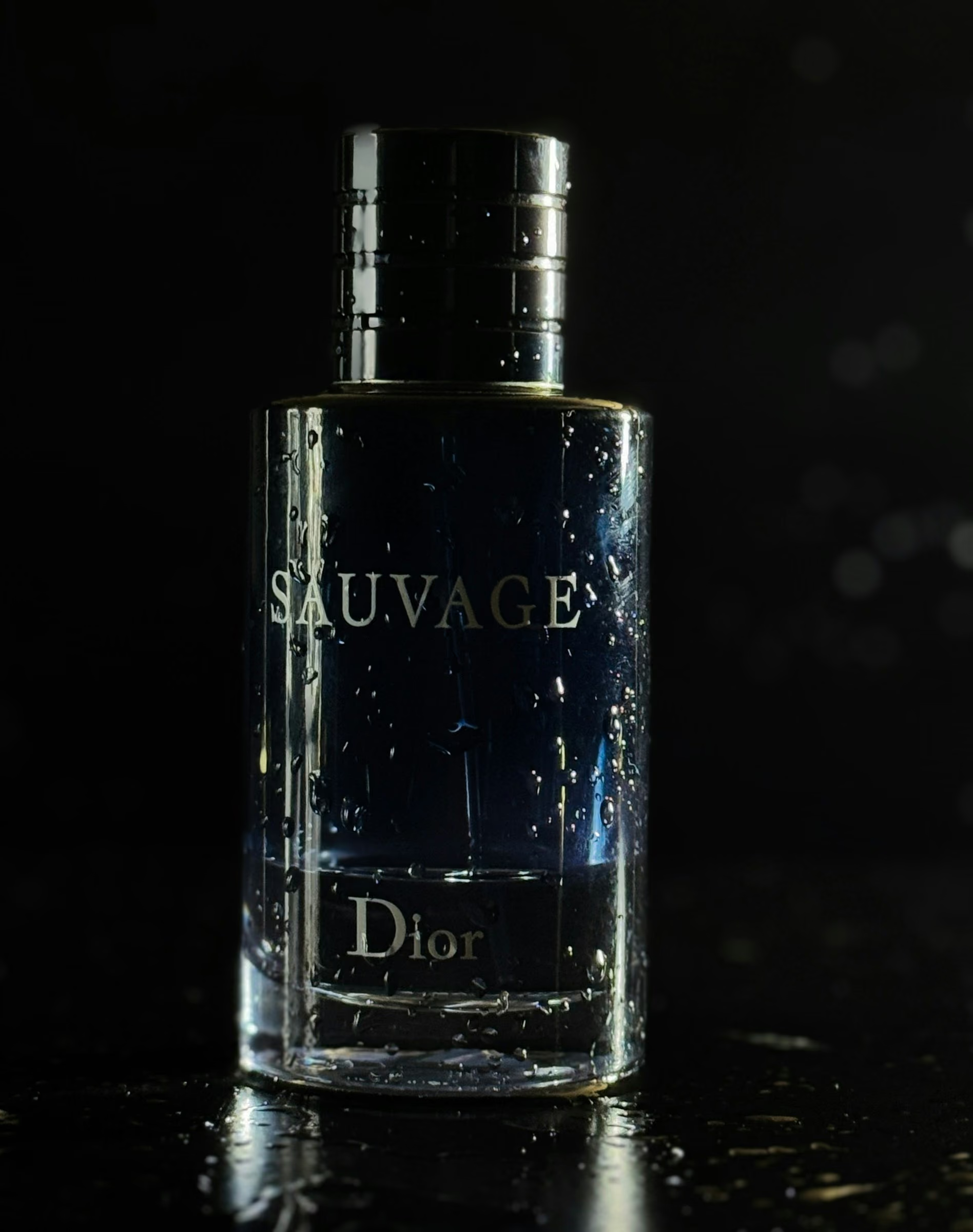
The first mistake is shopping from a screenshot. A photograph arrives of a glossy black bottle shaped like YSL Black Opium, or a pink one in the family of Valentino Born in Roma, with a tempting figure underneath and a promise of speed. That image carries not one verifiable fact: no batch code, no packaging condition, no age. A photograph is not a shop shelf. Ask for images of every side of the carton and of the base of the bottle, or better still, deal with someone you can actually question.
The second is never asking how authenticity is handled, usually out of a worry about offending the seller. In reality the reaction to that question is valuable information in itself. Someone who bristles, answers with a slogan, or changes the subject has already replied. Someone who explains what they can and admits plainly what they do not know has earned a first measure of trust.
The third is chasing only what went viral last week. Social attention creates genuine demand, but it also creates a fast wave of counterfeits around the same fragrance, because copies follow the most-searched name. A trending scent also arrives late in distant markets, where ten sellers then offer it simultaneously. It is smarter to place one or two popular names alongside choices you can personally explain, and to read a fragrance page on Fragrantica before ordering so that you know its notes and its reputation for performance rather than buying the noise around it.
The fourth is judging from paper, or from the first few minutes. A test strip gives you the opening, and the opening is the shortest and least representative part of a fragrance. Spray on skin, wait at least an hour, and smell again in the evening. Many perfumes rejected in the second minute are the same ones bought twice after a full day of wear.
The fifth is confusing concentration with quality. An eau de toilette is not automatically a weaker version of an eau de parfum; sometimes it is a genuinely different composition, lighter on purpose and better suited to a hot afternoon. Extrait is not always stronger in the way people mean either, since many extraits hug the skin and barely project. Ask about projection and longevity separately rather than asking for something strong.
The sixth is storage. Perfume is damaged by three things: heat, light, and swings in temperature. A humid bathroom, a car parked in the sun, or a shelf in front of a window will all shorten the life of a bottle and change its colour and smell. A dark, cool, stable place is correct, ideally in the original carton. There is a longer note on this in heat and the life of a fragrance.

The seventh is judging by price alone, in either direction. A figure absurdly below every other source points to a problem in the source, the condition, or the product itself. A high figure guarantees nothing, since good counterfeits are sometimes priced close to the original precisely so they raise no suspicion.
The eighth is buying a fragrance because you liked it on someone else. Skin chemistry is not a poetic detail: pH, skin oiliness, temperature and even diet change how a perfume opens. The same bottle may last eight hours on one person and three on another, and read sweet on one and sharp on another. Never buy a full bottle because it worked on a friend; wear it yourself for a full day.
The ninth is assuming a fragrance is fixed across the years. Houses adjust their formulas for many reasons, and natural harvests differ from season to season, so you can buy a completely genuine bottle and feel it is not what you remember. Ask roughly how old the stock is rather than assuming the difference is fraud, and see the note on what authentic really means.
The tenth belongs specifically to people buying for a shop: widening the assortment before knowing the customer. Twenty names in the first month means capital frozen in bottles that do not move and attention wasted on scents nobody will recommend. Start with a small selection where you can explain every bottle, then widen based on what people actually asked for rather than on what looked attractive in a list.
The last mistake is treating the conversation like a vending machine: one message, one order, then silence. A seller who knows you recommends better next time and tells you when something is not available instead of quietly substituting. For more, see how to spot an original perfume.
If you would rather ask a person than guess: we are a perfume trading company in Dubai, and Ahmad and Khaled reply on WhatsApp, or through the contact form.