Journal
2026-08-22 · 5 minDesigner or niche: what the words mean
Designer and niche describe distribution and intent, not quality. What actually separates them, why price misleads, and how a counter should mix the two.
Plenty of people come to fragrance holding a ready-made binary: big names only, or niche only. Both words are useful, but they rarely mean what people assume. The difference between designer and niche is not a difference of quality, and not necessarily a difference of price. It is a difference of production intent and distribution. Understanding that makes you a better buyer, and it explains why a good counter needs both.
A designer fragrance carries the name of a fashion house or a broad consumer brand, and is usually produced under licence by one of the large fragrance groups that handle formulation, filling and distribution. The logic is a logic of audience: the scent is tested on large panels, tuned to please as many people as possible, and supported by a campaign and a familiar face. That is not an accusation. Many of the finest contemporary perfumes came from exactly this route, and they are the ones a customer knows before walking into a shop.
Niche originally described small independent houses selling through a limited number of doors and giving the perfumer wider freedom in both materials and idea. Nishane, for instance, is an independent house known for high concentrations and dense compositions that do not apologise for themselves. Nasomatto pushed the logic further still: few releases, extrait concentration only, and a refusal to publish note pyramids at all so that people smell before they read. No large brand's accounting could permit that behaviour, and it is precisely what a niche buyer is paying for.
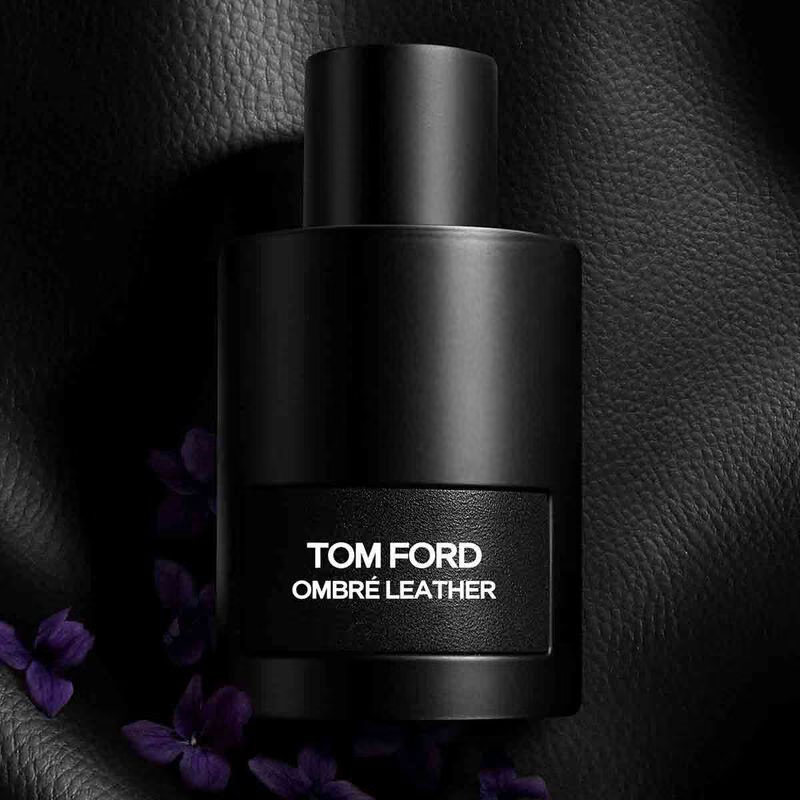
Between the two poles sits a wide middle ground where most of the market now lives. Tom Ford Ombré Leather is a good illustration: distribution and advertising presence that look entirely designer, wrapped around an olfactory language much closer to niche — dry leather, spice, heavy jasmine and a smoky finish. So many houses now work in this middle that labelling a fragrance niche or designer tells you less than simply describing how it smells.
What genuinely changes between the two routes? Three things. Material density, since smaller houses can sometimes use costlier ingredients or higher proportions because their volumes allow it. Risk, because a perfume that smells of asphalt or ink will not survive a global marketing meeting but may make a small house's reputation. And distribution, since scarcity is part of what niche sells and ubiquity is part of what designer sells.
Price deserves a correction here. The cost of a bottle does not sit mostly in the juice. Glass, cap, carton, campaign and retail margin make up a large share of the final figure. An expensive niche release may spend less on advertising and more on materials, while a cheaper designer bottle may carry a genuinely clever formula written by a famous perfumer. Price is therefore a weak signal of quality and a good signal of business model, nothing more.
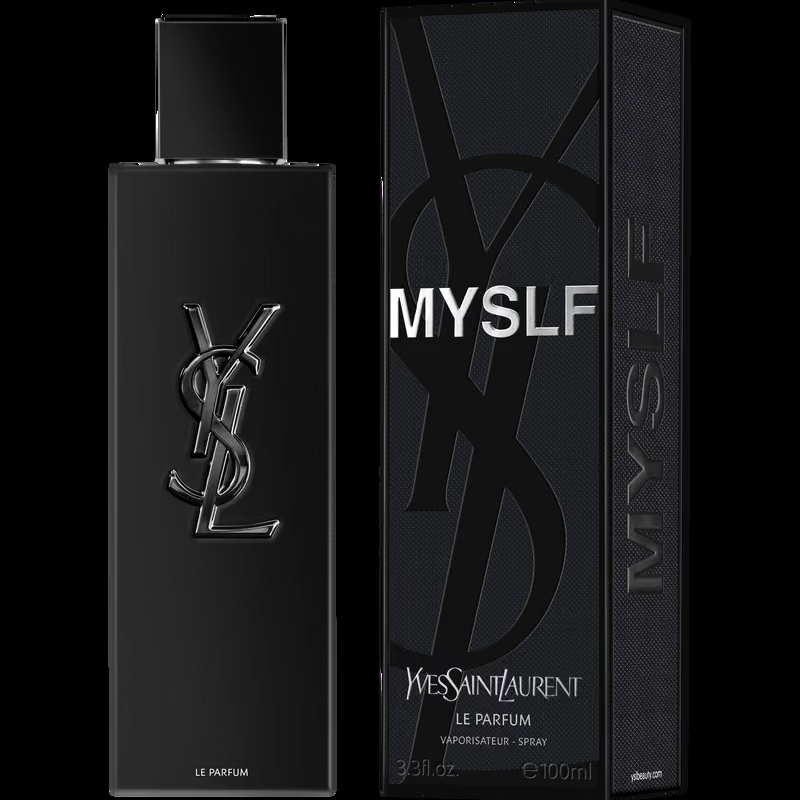
One of the fastest ways to understand a fragrance is to look at who composed it rather than who signed it. Names like Alberto Morillas, Olivier Cresp and Dominique Ropion recur behind perfumes carrying completely different logos, because large and small houses buy from the same composition firms. When you discover that a scent you love and a scent you dislike came from the same hand, you begin reading fragrance as style rather than as branding, and that is the most mature stage of developing taste.
A word of warning in the other direction: niche has become a marketing costume too. Many new labels adopt the exterior signals — a heavy box, an obscure Latin name, talk of rare materials — without carrying a single new olfactory idea. The description on the carton is not a guarantee, and a luxurious bottle is not evidence of depth. The verdict belongs to your nose after two hours, not to the printed word.
Which is why a good counter mixes. Recognisable names bring people in and justify a first visit; the strange bottle is what creates a regular. Sell only big names and you become a weaker version of every other shop in the city. Sell only niche and you need an educated audience that does not exist in every neighbourhood. The ratio between them is a local decision rather than a general rule.
Practically: stop asking designer or niche, and start asking heavy or light, sweet or dry, day or evening, and for whom. There is another note on what the concentrations actually mean, a third on old fragrances and new ones, and the rest of the series in the journal. For building either your taste or an assortment, Fragrantica gives you the pyramid, the launch year and the perfumer, while old Basenotes threads tell you how a scent aged in public.
We are a perfume trading company working from Dubai, and we are none of the houses named above. If a longer conversation about your market's taste would help, Ahmad and Khaled are on WhatsApp, or use the contact form.