Journal
2026-08-18 · 5 minHow to spot original perfume before you buy
Cellophane, batch codes, the spray pattern and how the juice behaves on skin — practical ways to tell an original perfume from a convincing copy.
“How do I know this perfume is original?” is one of the most-typed questions in fragrance, and the reason is simple: a photograph lies easily. A dark, faceted bottle in the shape of Dior Sauvage looks identical to the real thing on a phone screen no matter where it came from, and a clear, severe rectangle in the family of Chanel No. 5 keeps its authority even when the liquid inside has nothing to do with the house. Cameras love glass, and counterfeiters know it. The real work begins when the box is in your hand. A photograph is not a shop shelf; on its own it proves nothing.
Start with the outer wrap. Factory cellophane is heat-shrunk, so it sits tight against the carton without slack, and the folds at each end are neat and mirrored on both sides. Hand-wrapping leaves bubbles, thick overlapping layers and a crooked seam. Then look at the carton itself: heavy board, cleanly cut edges, stable colour, and printing sharp enough that the small type stays legible under a lamp. The regulatory text and ingredient list on the back are printed cleanly on originals. On copies they tend to be faint, crowded, or carry small spelling errors that a hurried eye skips.
Next, the batch code. Most large houses print a short alphanumeric code on the base of the carton and on the underside or back label of the bottle, and the working rule is that the two should match. A code on the box but not the bottle, two different codes, or ink that rubs off with a thumb are all reasons to slow down. Understand what the code is, though: it identifies a production run rather than an individual bottle, so a repeated code is not evidence of anything, and the lookup sites online are enthusiast projects useful for guessing age and never a certificate.
The bottle hardware talks too. An original cap seats in one decided movement, without wobble or grinding. The atomiser gives an even, fine mist rather than a jet that runs down your hand. The dip tube reaches the bottom of the bottle and does not sit twisted against the glass. Labels are straight, the logo is engraved or printed with clean edges, and the glass is free of bubbles and rough mould seams. No single detail is a verdict; three together are enough to postpone a purchase.
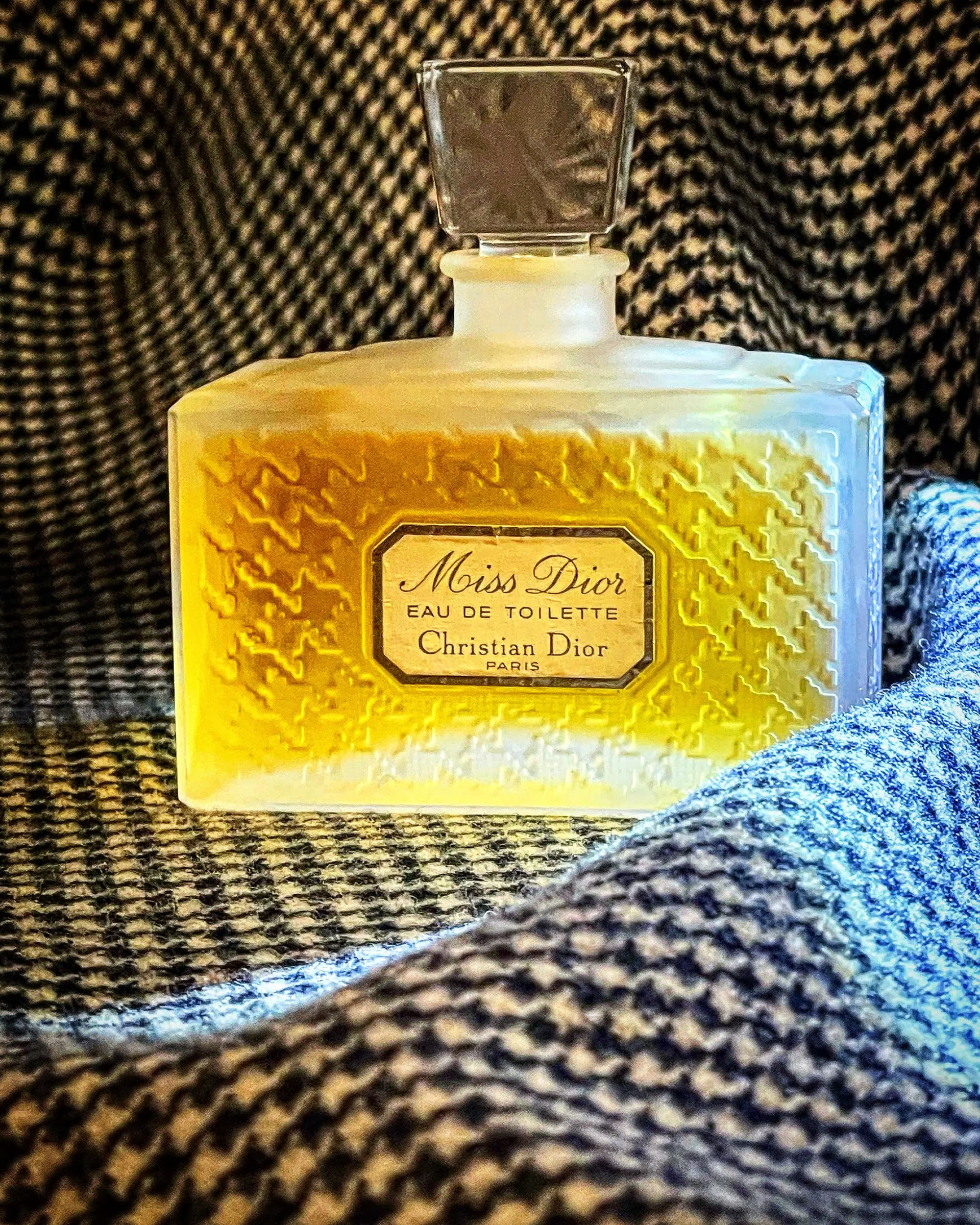
Two more checks are worth learning. Fill level on originals is machine-consistent, so the gap between liquid and neck barely varies across bottles from one run, while copies differ visibly. Weight matters too: house glass is heavy with a thick base. And retire the idea that a sealed box proves anything — shrink-wrap machines are cheap, so read how the wrap was applied, not whether it exists.
Then give the juice time, because that is the test nobody can fake. Spray on skin, not only on paper, and wait. An original perfume is built in three movements: a fast top that burns off in minutes, a heart that carries its character, and a base that stays on skin and clothing for hours. Real Sauvage opens sharp and fresh, then settles into a warm ambery dry-down that is still there in the evening. Copies tend to collapse — hard alcohol for a few minutes, then one flat sweet note, then nothing. Colour is information as well: cloudiness, sediment, or a shade much darker than people usually describe is a fair reason to ask questions.
It also helps to know that the choice is not simply real or fake. Between them sit inspired-by fragrances sold under their own names, testers that legitimately arrive without full packaging, bottles that have been decanted and refilled, and genuine stock that aged badly in heat until the top notes oxidised. Someone who understands those categories asks sharper questions than “is it original?”
Read before you smell, too. An archive like Fragrantica keeps launch years, note pyramids and thousands of user reports on longevity and projection. If you already know that a fragrance should open with bitter bergamot and that its logo is engraved rather than stuck on, your eye moves much faster in front of any copy.
One last signal has nothing to do with glass: how the seller behaves. Anyone who takes offence at a question about authenticity has answered it, and anyone who rushes you, refuses a test, or quotes a figure far below every other source is telling you something about their goods. The question that matters most is whether that person will still reply next month, because buying original perfume is at minimum a short relationship.
The skill is built by repetition: the feel of the carton, the batch code, the spray, then two hours on skin. If you want to go further, there is a note on what a bottle photo cannot prove, another on what “authentic” means when you actually buy, and the rest of the series in the journal.
We are a perfume trading company in Dubai rather than a fragrance house. If you want to carry the conversation further about a particular bottle, Ahmad and Khaled answer on WhatsApp, or you can use the contact form.