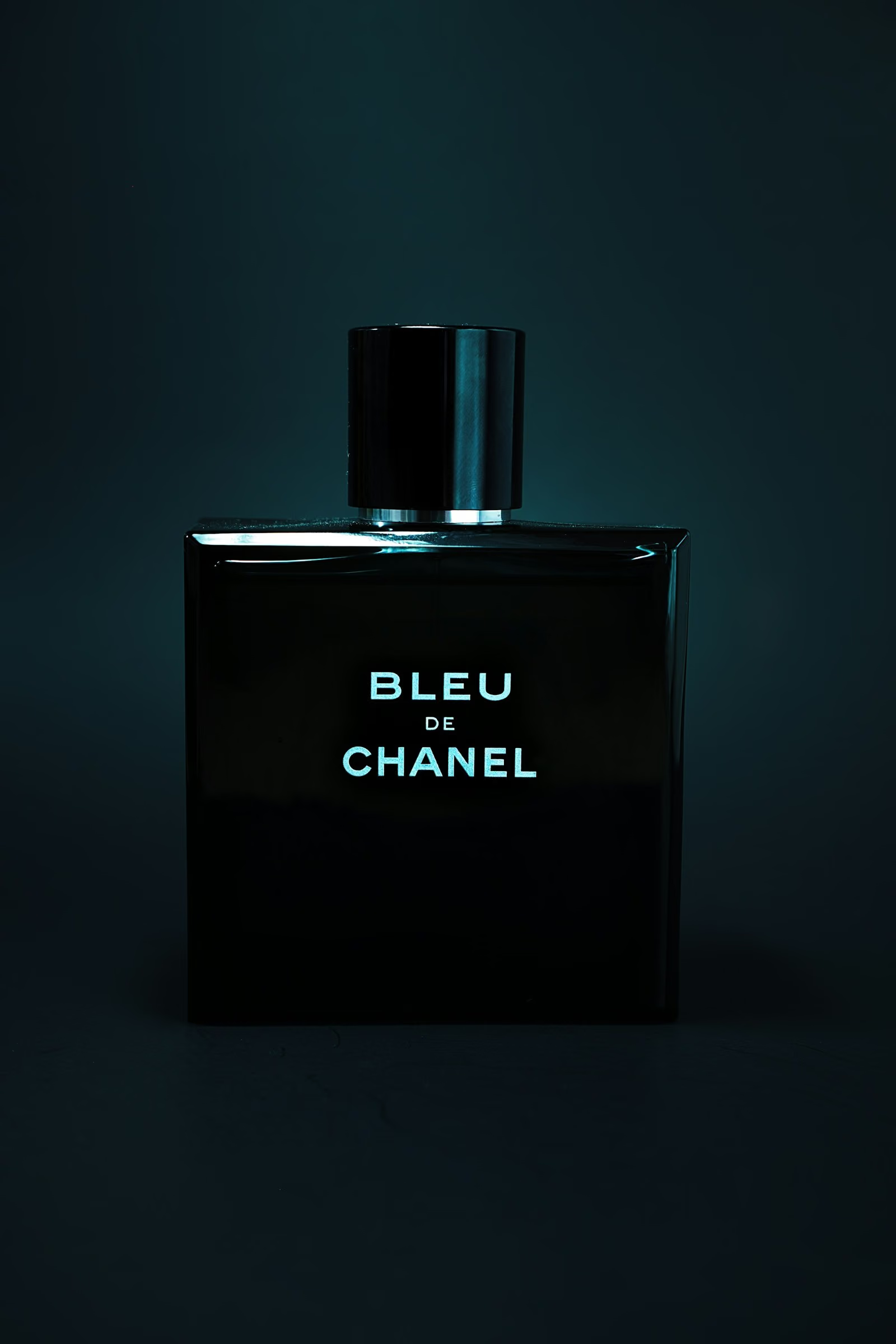
Journal
2026-08-27 · 4 minEDT, EDP, extrait: what concentration means
Concentration is not the same as strength. What eau de toilette, eau de parfum and extrait actually change, using Guerlain and Chanel No. 5 as examples.
Most people who search عطور do not think in concentrations. They think in outcomes: this one lasted, this one disappeared by lunch, this one gave me a headache in the car. Concentration is the vocabulary that connects those outcomes to something you can actually ask for, and it is one of the few technical subjects in perfumery that repays five minutes of attention.
The word describes how much perfume compound is dissolved in the alcohol and water carrying it. Cologne sits at the light end. Eau de toilette above it. Eau de parfum above that. Parfum — extrait, in the older language — is the densest. The bottle photographed with this piece belongs to a house that still teaches the full ladder; Guerlain is a good example because it kept extraits alive when much of the industry stopped bothering with them. But there is no legal scale. One house's eau de parfum can be richer than another's extrait, and the label on the box is a commercial decision as much as a formulation one.
The most useful thing to understand is that concentration is not the same as strength. Strength, as people actually experience it, is three separate things: projection, meaning how far a fragrance travels; longevity, meaning how long it survives; and intensity, meaning how loud it is close to the skin. A higher concentration usually helps longevity. It does not guarantee projection, and it can even reduce loudness, because extraits are often built around heavy base materials that stay near the body rather than volatile top notes that fill a room.
Composition decides more than the label does. A citrus eau de parfum can vanish before a woody eau de toilette has finished opening, because bergamot and lemon molecules are light and leave quickly, while sandalwood, patchouli, amber and musk are heavy and linger for hours. When somebody says they want something strong, they usually want a base-heavy composition — not a higher percentage of a bright one.
There is a second surprise for most buyers: different concentrations of the same name are usually different fragrances. Chanel No. 5, the pleated glass in the second image, is the classic demonstration. The parfum, the eau de parfum, the eau de toilette and L'Eau are related the way siblings are related, not the way strong tea relates to weak tea. The parfum is rounder and waxier; the eau de toilette is brighter and more aldehydic in its opening. Choosing between them is a question of taste, not of power.
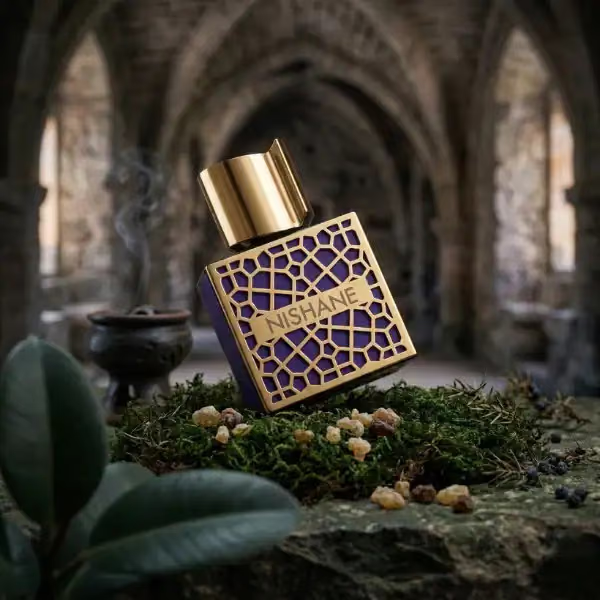
Application changes the answer again. Extrait was designed to be dabbed at pulse points, which is why so many still arrive with a stopper instead of a pump; spraying it the way you spray a toilette will overwhelm a room and empty the bottle quickly. Eau de toilette rewards generosity. Skin matters too — dry skin holds less, which is why the same bottle lasts all day on one person and disappears on another.
Heat rewrites everything above. In hot, humid air the volatile top notes flash away faster and the heavy base amplifies, so a dense extrait that feels elegant on a cool evening can feel suffocating at midday. There is a longer note on that in heat and the life of a fragrance. If you are buying for somewhere hot, a lighter concentration and fewer sprays are usually the kinder choice, and the wearer will still smell like themselves at four in the afternoon.
For anyone selling or advising, the practical translation is to stop quoting letters and start describing behaviour. Lighter and brighter, for daytime. Denser and slower, for evening. This one stays close to you; that one announces you from the doorway. If a customer asks for the strong one, ask where they smelled it, on whom, and in what weather — you will often find they are describing a composition rather than a concentration. Reading how ordinary wearers put this into words on Fragrantica is a fast education in the vocabulary.
One warning worth repeating. Quietly moving a customer between concentrations of the same name is how trust breaks. They will notice the difference, they will not be able to explain it, and they will conclude the bottle is fake. If you are discussing a name, discuss the version as well.
If you want to think a concentration through before you buy perfume, HH Perfumes is a company in Dubai; Ahmad and Khaled reply on WhatsApp, and the contact form reaches the same desk.