Journal
2026-08-26 · 4 minWhen a perfume price is too good to be true
An impossible discount on a bottle like Creed Aventus is a clue about the channel it came from. How to read price as evidence rather than as a bargain.
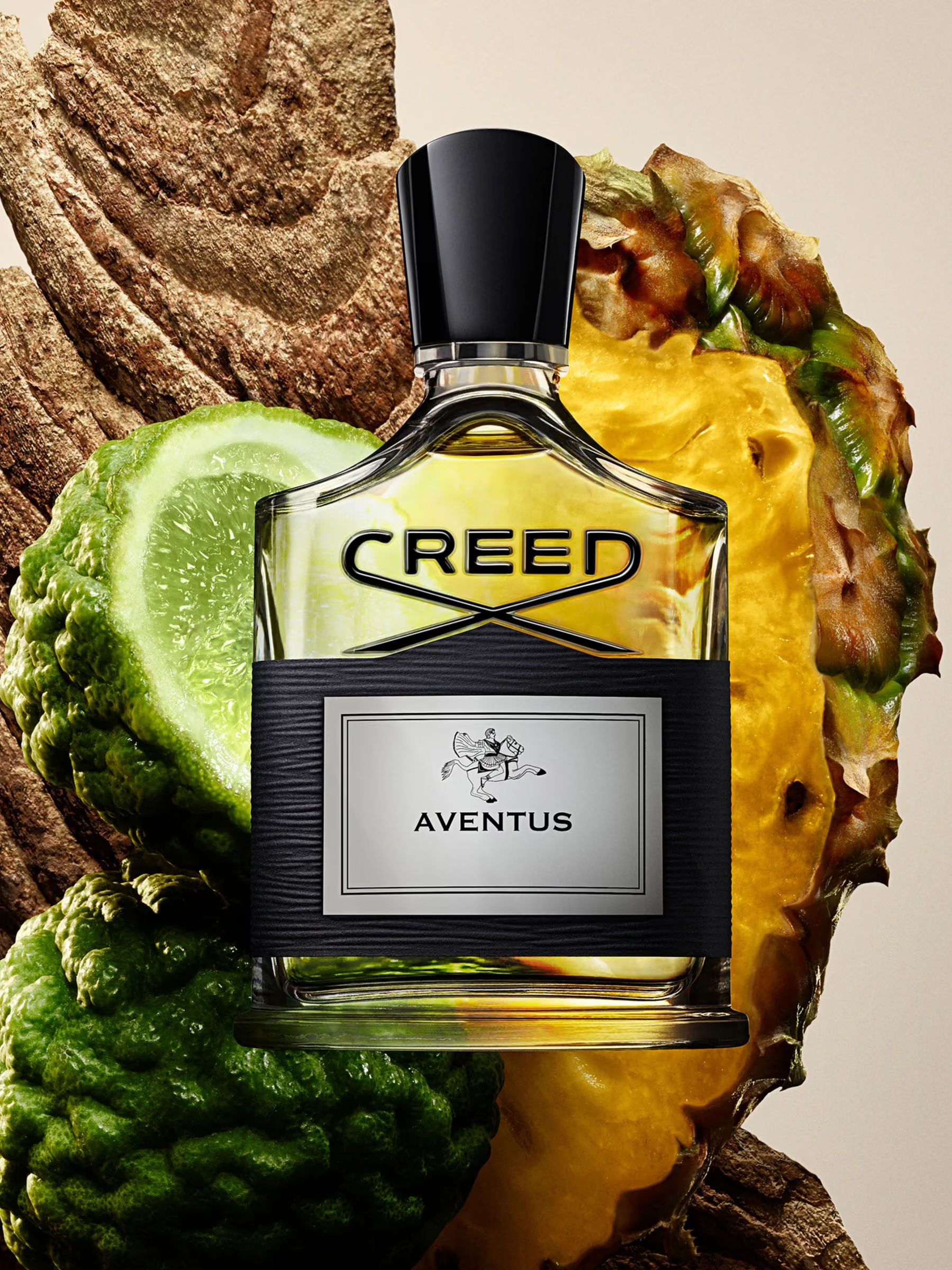
Price is the first thing a buyer reads and the last thing that should decide a purchase. The bottle photographed with this piece is the pine-and-smoke silhouette people picture when they type Creed Aventus, and it is also one of the most copied objects in modern perfumery. High desire, instant recognition and a large reward for anyone willing to lie: that combination is why price is such a loud signal in fragrance. A number proves nothing on its own. A number that nobody can explain usually has an explanation somebody is hiding.
Start with the honest reasons an original bottle can cost less than you expected. A retailer clearing an older presentation. A discontinued flanker nobody reordered. Unboxed testers, which are the same juice in plainer packaging. Stock bought before a currency moved. A shop that overbought for a gifting season and would rather recover its shelf space than its margin. Each of these has a story a seller can tell you in one sentence, and each of them is finite. You can hear where it ends.
Now the other kind. A discount with no reason attached, available in any quantity, for any name you ask about, indefinitely. Legitimate discounting is specific and it runs out. Replica supply is generic and it never does. When one seller can quote the same startling level on a small independent extrait, a mass-market designer bottle and a house that allocates tightly, you are not looking at someone with unusual access. You are looking at a list that was never real.
It helps to know where the money actually goes in an original bottle. A large share sits in materials you cannot see: naturals with agricultural prices that move with weather and harvest, and captive aromachemicals licensed from the companies that invented them. The rest sits in the parts you can see and in the layers between the perfumer and you — glass, pump, lacquer, carton, licensing, distribution. A copy saves money by deleting the expensive middle. The bottle is the easy part to imitate. The composition is not.
So the useful test is not whether something is cheap, but whether it is cheap against everything. Look at the whole visible market for that name instead of the single offer in front of you. If serious sources sit inside one broad band and one listing sits far outside it with unlimited depth, the listing is the anomaly, not the opportunity. Communities like Fragrantica and Basenotes help here — not as price guides, but because years of user reports tell you how a fragrance is supposed to behave over six hours, which is exactly what a copy fails to do.
The second test is the conversation. Ask why the price is what it is. A real answer is boring and checkable: this is an older batch, this is a tester, this is what was left after a season. An evasive answer changes the subject to urgency. Someone else is asking. This ends tonight. Take it or leave it. Urgency is the technique of people who do not want you thinking for another hour.
Ask what happens afterwards, too. Anyone can be warm before payment. What separates a trading relationship from a transaction is behaviour when something is wrong — a sprayer that spits, a batch code that does not match between carton and bottle, a delivery that arrived hot from a van. If you want the physical checks in detail, how to spot original perfume is the companion note, and what a bottle photo cannot prove covers the part of this that happens on a screen.
One more thing deserves saying plainly. Wanting to buy original perfume at a fair level is not naive, and paying more does not purchase authenticity either. Overpriced fakes exist precisely because buyers learned to distrust cheap ones, and a confident invoice has fooled more people than a suspicious one. Price is a clue in both directions. Weigh it alongside packaging, provenance, how the juice behaves on skin, and the character of the person selling it to you.
If you would rather test all of that in a conversation than on a checkout page, HH Perfumes is a company in Dubai — Ahmad and Khaled answer on WhatsApp, or write through the contact form.