Journal
2026-08-05 · 4 minWhat a bottle photo cannot prove
A photograph shows glass, print and a cap. It cannot show the juice, the batch, or how the bottle was stored. Where the line actually falls.
Photography is very good at glass. Studio light rakes across a faceted bottle, a polarising filter kills the reflections that would give the trick away, and a retoucher cleans the edges. A photograph flatters an object almost by default, which is precisely why it is weak evidence.
It helps to separate three things that get confused constantly: the packaging, the juice, and the batch.
Packaging is the only one a camera sees at all, and it sees it badly. At the resolution most listings use, a great deal of real detail is simply gone. The depth of an embossing, the sharpness of a moulded seam, the weight of glass in the base, whether cellophane is machine-wrapped with tight corners or hand-wrapped with a heat gun — these are the things that separate a convincing copy from an original, and nearly all of them are tactile or need macro lighting to read. A phone photo at arm's length gives you a silhouette, and silhouettes are the easiest thing in the world to reproduce.
Worse, photographs of packaging are frequently not photographs of the bottle under discussion at all. Campaign renders, press images and other people's studio shots circulate freely. A listing image can be an entirely accurate picture of a genuine bottle that has nothing to do with what will arrive.
Then there is the confusion inside a single name. Dior Sauvage is not one object. The eau de toilette, the eau de parfum and the Elixir differ in cap treatment, label colour and juice tone, and differ far more in character: the EDT is bright bergamot and pepper over ambroxan, the EDP is warmer and more vanillic, the Elixir is dense and spiced, almost liqueur-like. In a small frame with warm lighting, all three read as the blue Dior bottle. Chanel has the same problem running the other way. Coco, Coco Mademoiselle and Coco Noir are three genuinely different fragrances that share a word, and a thumbnail flattens them into one.
Juice is the second thing, and here the camera is nearly useless. Colour tells you very little. Fragrances darken with age and maceration, some are dyed and some are not, and the same reference can look amber in one light and straw in another. People routinely reject genuine bottles for being too dark and accept copies for being the right colour. What matters is behaviour on skin over hours — an opening, a turn, a base that arrives an hour in. Copies tend to be legible for twenty minutes and then collapse into alcohol and a single sweet note. No image captures that arc.
Batch is the third thing, and it is where most of the useful information lives. Houses print production codes on the carton and, usually, on the base of the bottle or the underside of the label. Two things are worth knowing. A mismatch between carton and bottle is a genuine warning and should stop a purchase. A match, on the other hand, proves much less than people assume — a code is a short string, and short strings are easy to copy. Batch codes are a filter, not a certificate.
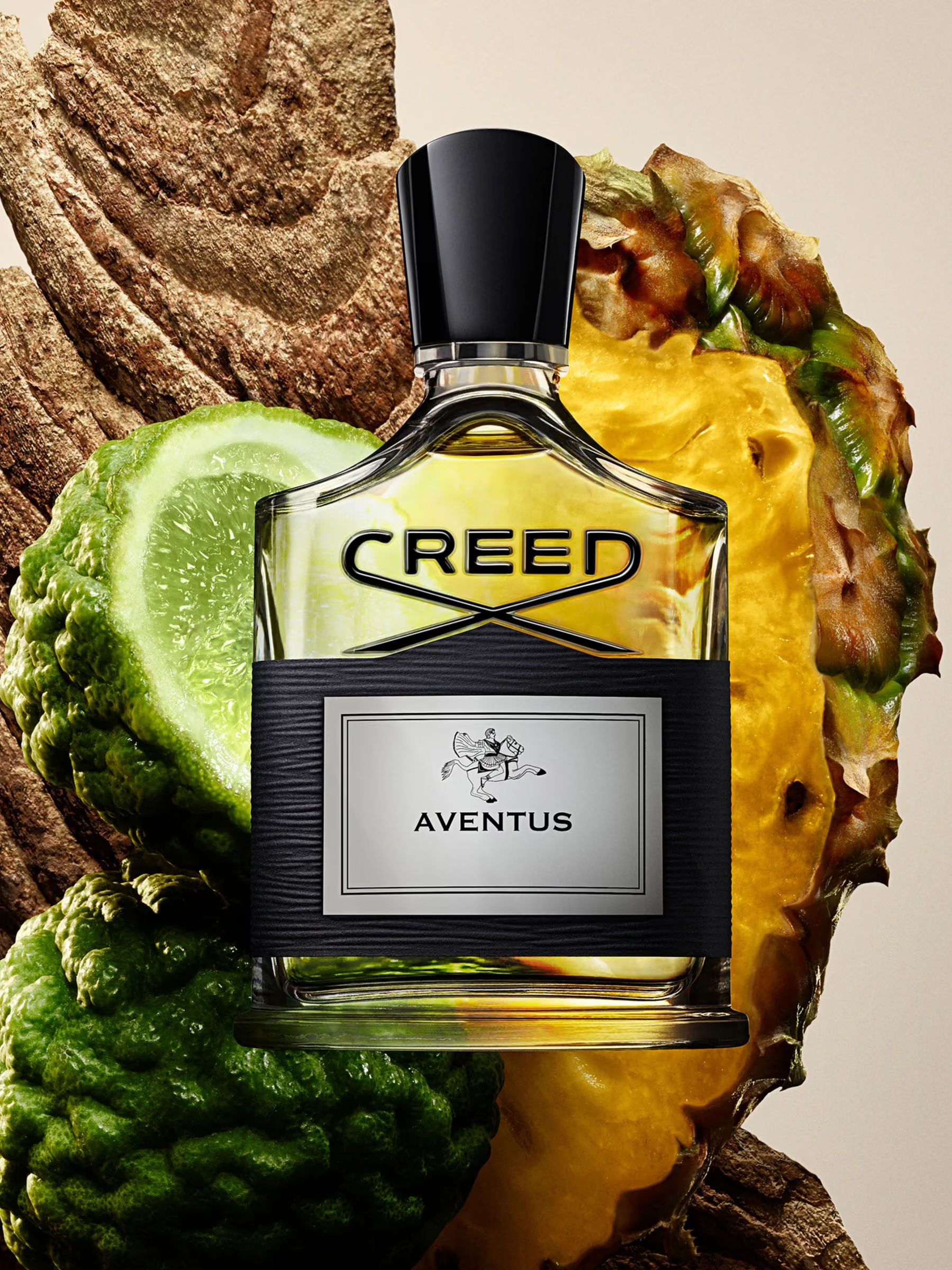
Batches also matter for reasons unrelated to authenticity. Creed Aventus is the standard example: it is produced in lots, its naturals vary, and enthusiasts have spent years cataloguing which batches lean smoky, which lean fruity, which feel thin. Two entirely genuine bottles can smell noticeably different. A photograph cannot tell you which lot you are looking at, and if you care about that distinction, only the code and a conversation will get you there.
There is a fourth thing no photograph addresses at all: storage history. A bottle that spent a summer on a sunlit shelf is chemically not the bottle it was in spring. The glass looks perfect. The top notes are gone.
So what is a photograph good for? Mood, scale, recognition. It tells you which object is under discussion. It is a pointer rather than a proof, and treating it as proof is how careful people still get caught.
If you want the vocabulary for describing what an image cannot show, there is a note on exactly that in the journal, and the community note listings on Fragrantica are a reasonable place to build it.
Once you are past the picture and want to ask a real question about a real bottle, ask a person — the contact page is where that begins.