Journal
2026-08-30 · 4 minDubai perfume culture since the 2010s
Oud chips, bakhoor and French classics on the same counter: how a city built a fragrance culture where the bottle is furniture and asking is the method.
Long before Dubai had a skyline worth photographing, it had a smell. Oud chips on charcoal, rosewater, musk and amber oils sold by weight, bakhoor smoke pushed through a wardrobe so that clothes carried a household's signature for days. Perfume in this part of the world was never only a personal product. It was hospitality, greeting, memory, and a kind of architecture you could not see.
What changed over the last fifteen years is not that the tradition faded. It is that the tradition collided, quite cheerfully, with everything else. A city that grew by taking in people from everywhere ended up with counters where a French classic sits beside an oil blended in a back room, and with customers who move between the two without feeling any contradiction at all. The same person will buy a designer eau de parfum for the office and burn bakhoor at home on a Friday, and see no tension in it.
The 2010s added a third layer, and the internet did most of the work. Fragrance turned into a public hobby. People started reading note pyramids, arguing about reformulations and posting their shelves. Arabic-language reviewers built serious audiences. Regional houses that had been making their own interpretations for decades found a global audience almost overnight, and enthusiasts elsewhere discovered that the Gulf had held an opinion about oud for several centuries longer than they had.
Heat did most of the shaping. In a climate where an afternoon can strip a light composition down to nothing in twenty minutes, taste drifts toward things with weight — resins, woods, ambers, materials that hold on. It also produced habits: scenting fabric rather than only skin, layering an oil under a spray, keeping something dense for the evening and something quiet for a cold office. None of that is fashion. It is adaptation, and it is why visitors often find the local palate heavier than they expected and then, after one summer, understand it.
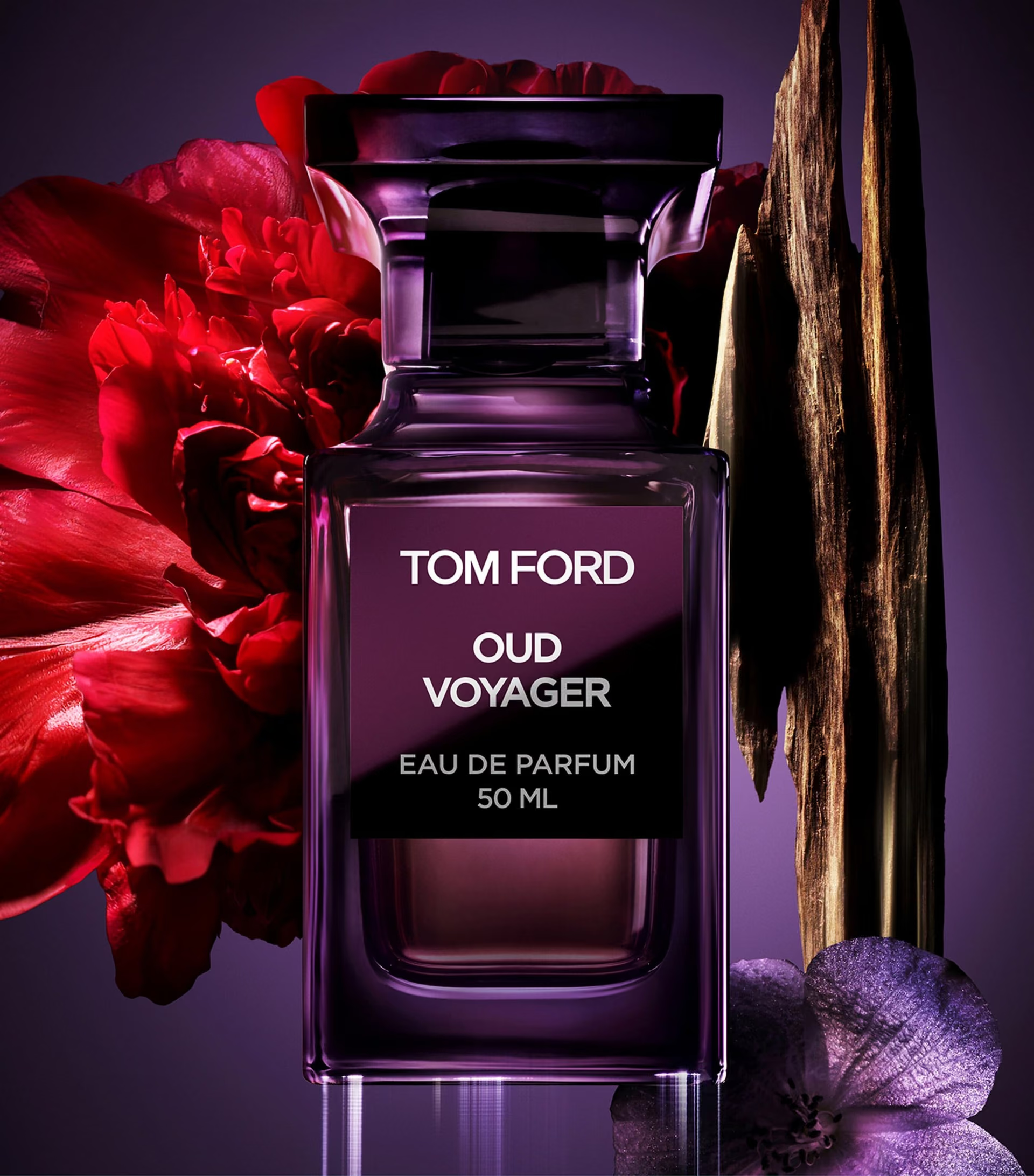
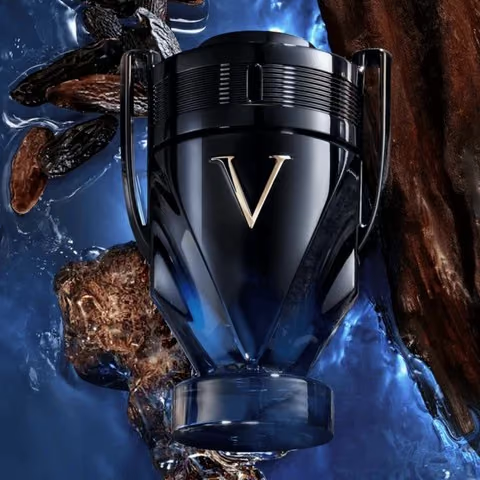
The bottles themselves became part of the room. Photograph one in daylight and you see why people leave them out: they are small pieces of architecture in glass and lacquer and weight, designed to look like something chosen rather than something consumed. The objects in the images here are exactly that — shapes, light, atmosphere. They are not a shelf and do not need to be. Half the pleasure of a bottle is that it sits on a surface and says something before anybody opens it.
The word original carries a specific weight here, and it is worth being precise about why. In a market this dense, with this much traffic and this many languages passing through, the word does not really function as a certificate. It functions as a relationship. You ask, you smell, you come back — and the person you asked knows you will come back, which is the actual mechanism that keeps things honest. That is a souq instinct, and it survived the move into air-conditioned malls and then into messaging threads.
It is also why the shopping culture here resists the catalogue. A counter in this city routinely serves someone who searched عطور in Arabic, someone who searched perfume in English, and someone who arrived with a screenshot and no words for any of it. Those three people need different conversations about the same bottle. A printed list flattens that difference; a person does not. There is more on the language side of it in how people search for perfume.
And the tradition keeps absorbing. Younger buyers raised on gourmands are rediscovering attar. Enthusiasts who arrived through French classics are learning to sit with a Hindi oud instead of flinching. Houses from this region are now the reference point for compositions made elsewhere. The through-line is not a style at all. It is the assumption that fragrance is something you discuss — with a seller, with a family, with whoever notices it on you. If you want the practical version, oud and oriental perfume explains the families, and why Dubai draws perfume conversations covers the geography.
HH Perfumes — ALHUDA&ALHIBA PERFUMS TRADING L.L.C — has been a company in Dubai since 2012, working in original branded fragrance. If you would rather talk to a person than read a page, Ahmad and Khaled answer on WhatsApp, or write through contact.