Journal
2026-08-29 · 4 minOud and oriental perfume: a taste guide
What oud actually is, why most oud fragrances are accords, and how the amber family differs — with Tom Ford and Lattafa as two routes into the same warmth.
Two words carry most of the confusion in this corner of perfumery: oud and oriental. People use them as interchangeable labels for warm and strong, then feel cheated when two bottles described the same way smell nothing alike. Both are worth unpacking, because once you can hear the difference, asking for what you actually want becomes much easier.
Oud begins as wood. Aquilaria trees, when infected by a particular mould, defend themselves by saturating their heartwood with dark resin. That resinated wood is agarwood — oud — and it is among the most expensive raw materials on earth, partly because the infection is uncommon and partly because good wood takes decades to form. It can be burned as chips, the bakhoor habit that still perfumes homes and clothes across the Gulf, or distilled into an oil measured out in drops.
This matters when you read a label. Genuine distilled oud oil is scarce enough that most fragrances using the word are built around reconstructions: accords assembled from woody, leathery, smoky and animalic materials that together read as oud to the nose. That is not a scandal, it is how modern perfumery works, and a well-built synthetic oud accord is often more consistent and more wearable than a natural oil. It does mean the word on a bottle describes a direction rather than an ingredient.
Natural oud is not one smell either. The vocabulary traders use — Hindi, Cambodi and the rest — describes character, not a shopping category. Hindi profiles run fermented, barnyard, almost medicinal, and they are an acquired taste that devoted buyers defend fiercely. Cambodi profiles are sweeter, fruitier and much easier for a newcomer. If somebody tells you they hate oud, there is a decent chance they met one of these once and assumed it spoke for all of them.
Oriental is a different kind of word. It is a family label, and the industry has largely moved to calling it amber, which describes the materials more honestly. The family is built on resins and balsams — labdanum, benzoin, styrax — with vanilla, spices and usually a soft musky base. Amber compositions feel warm because those materials are heavy, slow and sweet in a resinous rather than sugary way. Oud can appear inside an amber composition, but plenty of ambers contain no wood at all, and plenty of oud fragrances are dry rather than sweet.
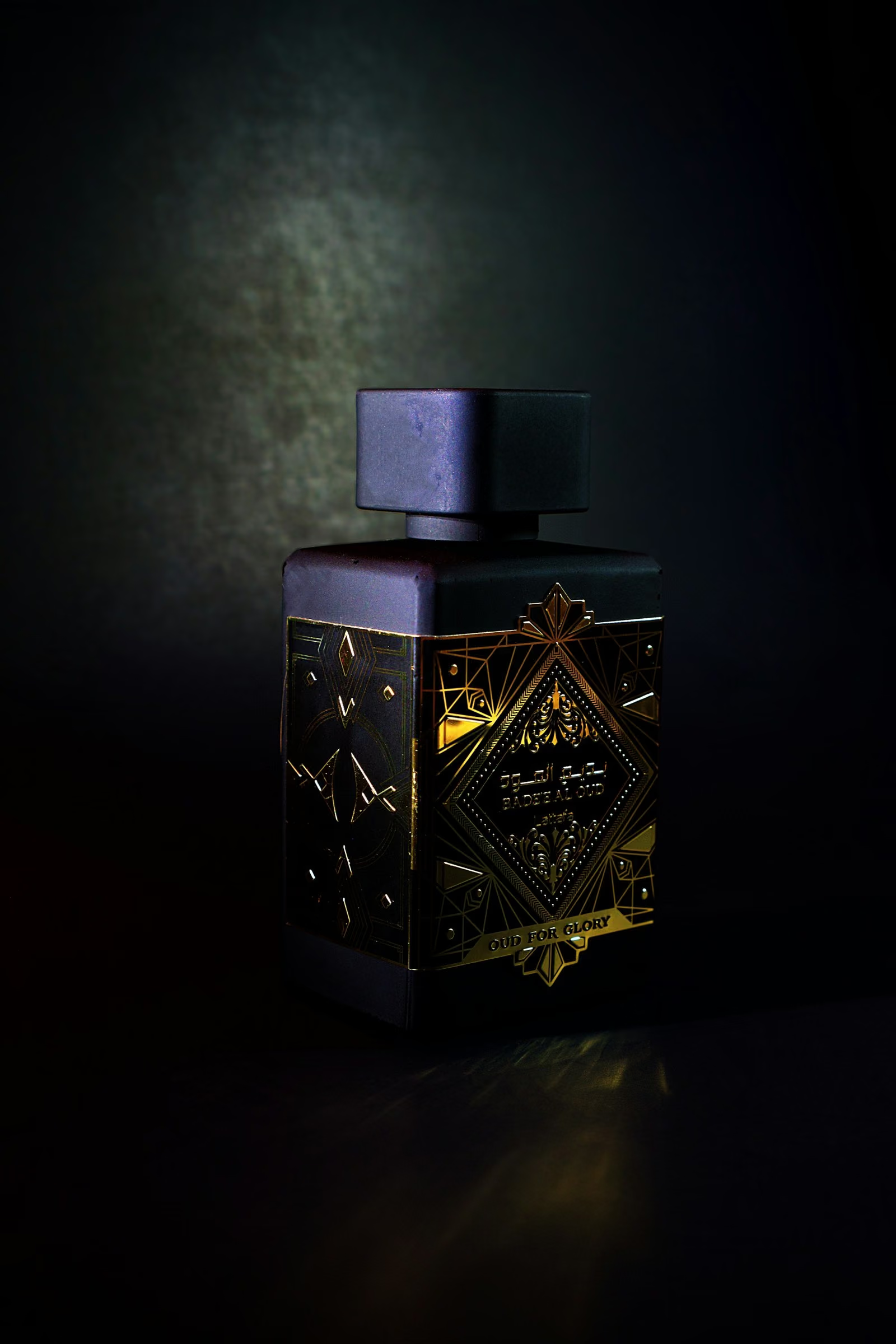
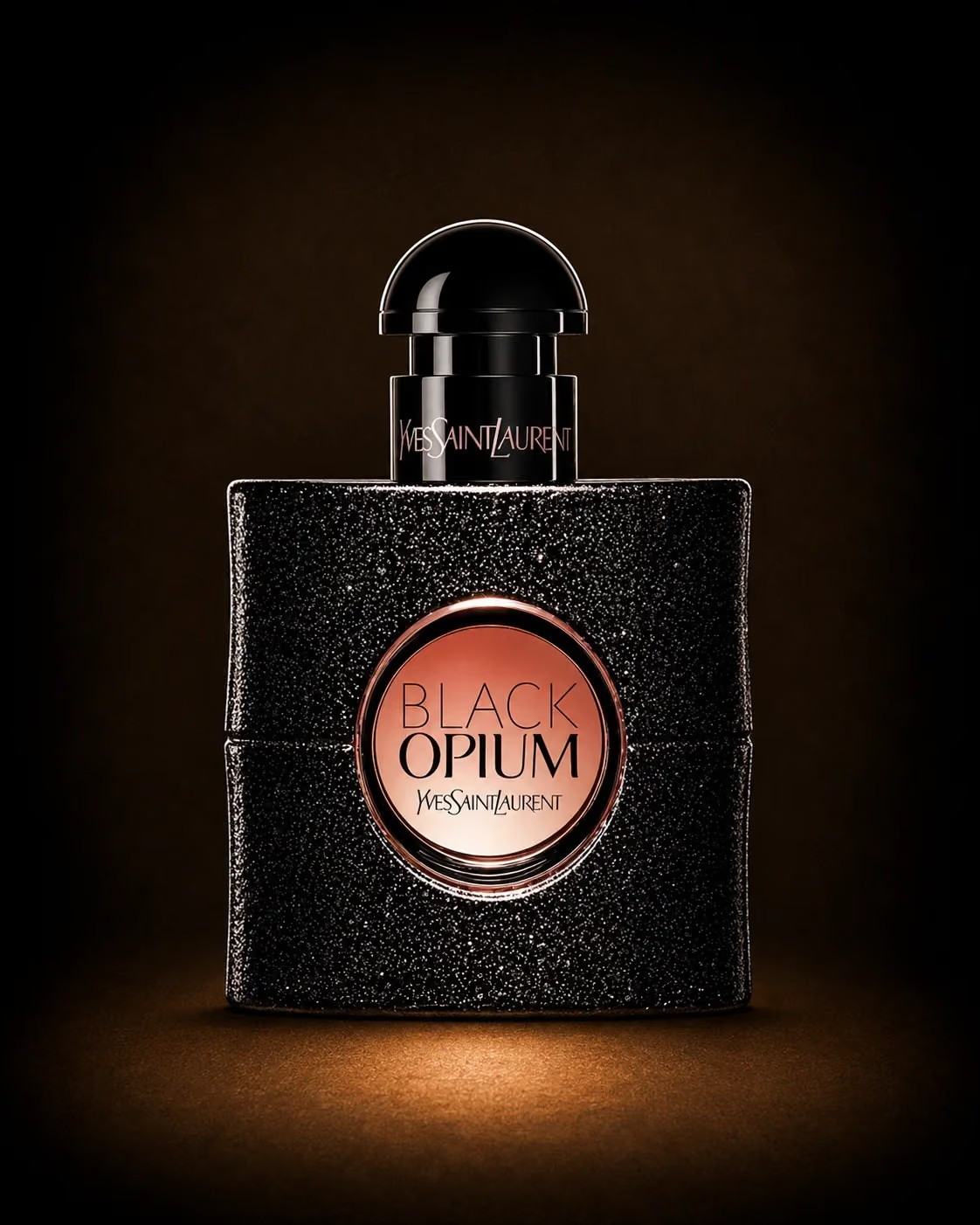
The bottles photographed with this piece show the two routes people usually take into this territory. One is the designer route: Tom Ford's Oud Voyager belongs to the line that made oud legible to a wider audience — polished, clean at the edges, oud used as texture rather than as confrontation. The other runs through the Middle Eastern houses, where Lattafa's Oud for Glory is one of the names Arabic-language searches reach for first: dense, smoky-sweet, generous with projection, built for a climate in which a quiet fragrance simply evaporates.
Heat explains much of why this family smells the way it does. In hot air, light materials leave almost immediately and heavy resins amplify. A composition of nothing but citrus and green notes reads as nothing by mid-morning, while a resin and wood base is still legible at night. That is also the trap: the same bottle that feels balanced outdoors in dry heat can be overwhelming in an air-conditioned room. Less is genuinely more with this family, and that advice has nothing to do with saving anyone money.
There is a habit worth borrowing, too. Layering, and scenting fabric rather than only skin. Bakhoor smoke through a wardrobe, an oil on the wrists, a spray on the shoulder of a jacket — none of that is accidental. Fabric holds fragrance for days where skin measures it in hours, which is how a warm accord can last without shouting.
If you want to ask for something in this family and be understood, describe temperature and texture rather than a label. Smoky or sweet. Dry wood or syrupy resin. Something for a long evening, or something a person can wear to an office. The threads on Fragrantica and Basenotes are unusually good on this family, because the people who love it argue about it in detail. For the neighbouring question of designer character versus independent character, designer and niche side by side looks at it from a shop's point of view.
If you would rather describe it out loud than type it, HH Perfumes is a company in Dubai — Ahmad and Khaled read WhatsApp, or write through the contact form.