日志
2026-08-31 · 4 分钟Arabic and French perfumery
Two schools, two histories, one shelf: how Gulf perfumery and the French tradition borrowed from each other until the border stopped making sense.
There are two great living traditions in perfume and they were built to answer different questions. The French tradition asks what a composition should say. The Arabian tradition asks what a material can do. Everything else — the bottles, the concentrations, the way people wear the stuff — follows from that difference.
The Arabian school is older and material-first. Its centre of gravity is oud, musk, amber, saffron and rose, especially Taif rose, used in high concentration and often in oil rather than in alcohol. Dehn al oud is applied in drops. Mukhallat — a blend, usually oil-based — is layered rather than worn alone. Bakhoor scents the room, the clothes and the hair before anyone is wearing a perfume at all. Longevity is not a bonus feature in this school; it is the baseline expectation, because scent is understood as hospitality and presence rather than as a private accessory.
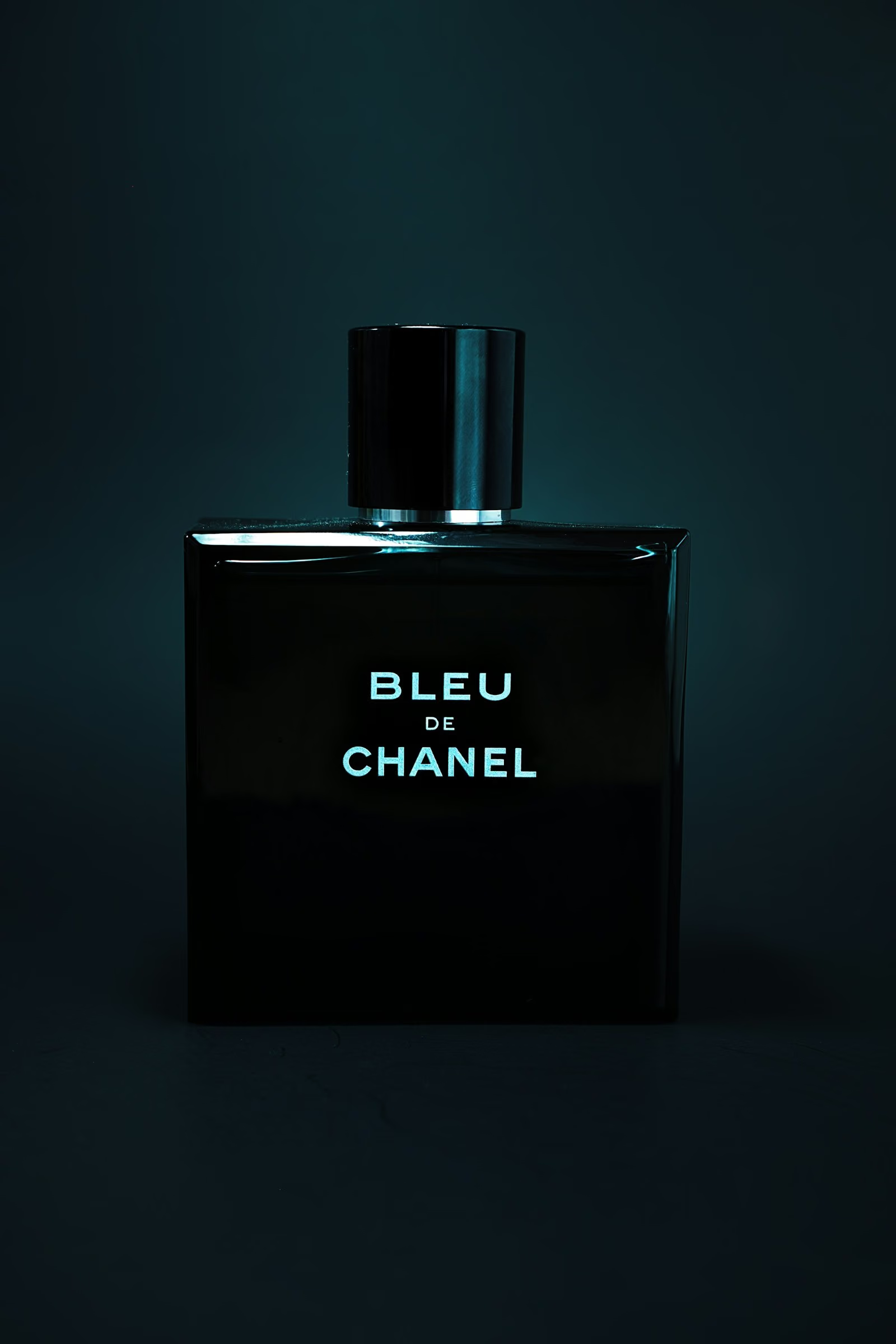
The French school, formalised around Grasse and the Paris houses in the nineteenth century, treats perfume as authored composition. Its ambition is abstraction: not to smell of a rose but to smell of an idea, assembled from naturals and, after the 1880s, from synthetics that made entirely new effects possible. Alcohol-based sprays, the structure of top, heart and base, the perfumer credited like a writer — these are conventions from this tradition. Guerlain is the clearest example of its continuity, a house that spent a century and a half refining a recognisable family accord. Chanel and Dior built the modern version of the same logic, where a perfume is a statement attached to a name.
For a long time the two schools mostly ignored each other commercially. Then the borrowing began, in both directions and with real force.
The French houses discovered oud. Yves Saint Laurent’s M7, launched in 2002 under Tom Ford’s creative direction, is usually credited as the moment a Western designer house put oud at the centre of a mainstream masculine perfume. It was ahead of its audience and did not sell well at first, and within a decade every major house had an oud in its portfolio. Dior, Tom Ford, Armani and the niche houses of Paris now compose with materials that were, a generation earlier, considered regional.
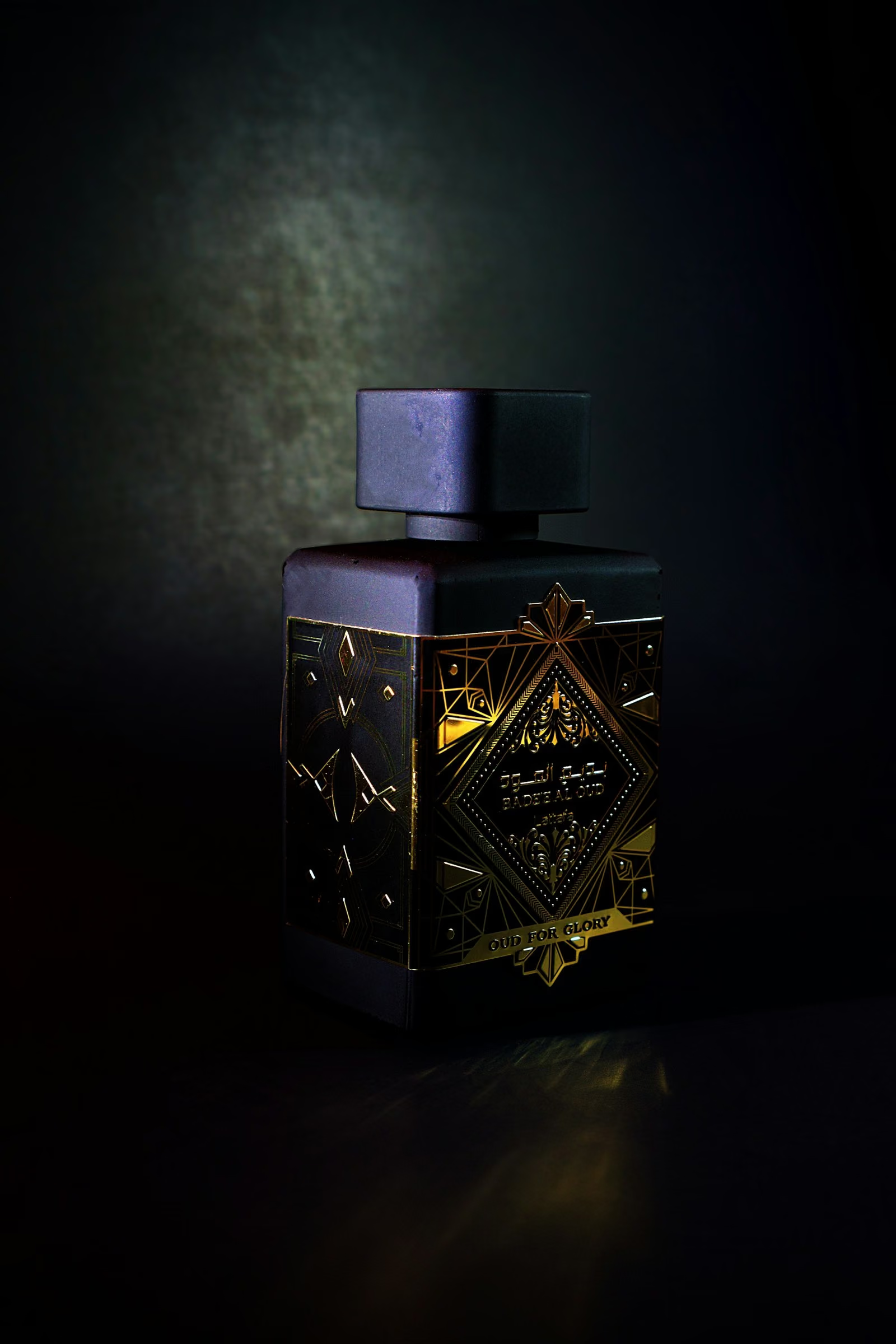
The Gulf houses moved the other way — adopting French construction, French-style spray presentation, designer bottle language and eau de parfum concentration, while keeping the density and the material palette that their own customers expect. Ajmal has been building in Dubai since the mid-twentieth century, with its own distillation history. Rasasi, founded in the same era, produces exactly this hybrid: Hawas is structured like a Western aromatic-aquatic fresh perfume and carries a weight and sweetness that reads immediately as Gulf. Lattafa is the newest and loudest of the three, and it has done more than any marketing campaign to teach a global audience that a perfume made in the Emirates can compete on its own terms.
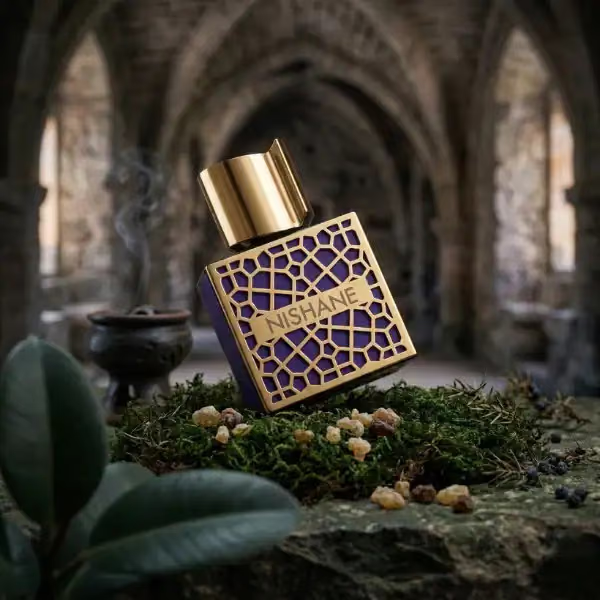
What results is a shelf where the border no longer holds. A Parisian niche house selling a rose-oud, a Dubai house selling a fougère, and a customer in either city who chooses by smell rather than by geography. The old shorthand — French means elegant, Arabic means strong — was never accurate and is now simply lazy. There are quiet, transparent Gulf compositions and there are French perfumes so dense they announce you from the corridor.
Two practical differences do survive, and they are worth knowing when you buy. The first is application: an oil is dabbed in tiny amounts and grows for hours, while a spray is dispersed and peaks early. Wearing an attar the way you wear an eau de toilette is the most common mistake newcomers make with the Arabian school. The second is layering. In the Gulf, combining bakhoor, oil and spray is normal practice, an assembled personal signature rather than a single purchase. That habit is starting to appear in Europe under the label “fragrance wardrobing,” which is a new name for something very old.
If you want to hear the two traditions arguing productively, smell an oud from each side of the divide in the same hour. The material is the same word; the intention is completely different. The material itself gets its own account in oud explained, and the way these names travel through search in two scripts is discussed in the language of scent across searches.
Neither tradition is the senior one. They are two answers to the same human question, and the interesting bottles are increasingly the ones that refuse to choose.
If you want to talk about original perfume from either school with a person rather than a homepage, write to Ahmad or Khaled on WhatsApp, or use the contact page.