Journal
2026-08-13 · 4 minHow brand names travel through search
Almost every fragrance search starts with a house name. What those searchers actually want, and why a page dressed as an official boutique confuses everyone.
Almost every fragrance search starts with a brand. People do not type aldehydic floral or woody amber with saffron. They type Chanel, Dior, Louis Vuitton, and then a word or two more. Understanding what those extra words mean is most of what there is to know about how fragrance is discovered online.
Search behaviour splits roughly three ways.
Some of it is navigational. The person wants the house itself — the official site, the official page for a specific bottle, the official boutique. They already know where they are going and are using the search box as an address bar. Nothing a third party publishes should try to intercept that intent, because the visitor will recognise immediately that they are in the wrong place, and the recognition will not be flattering.
Most of it is informational. Sauvage notes. Is this discontinued. What does it actually smell like. Which one lasts longer. This is the largest share by volume, and it is genuinely open: the person is not looking for a specific website, they are looking for an explanation. A page that explains something clearly, and names the fragrance because the fragrance is what is being explained, belongs in that conversation. Community sites are built almost entirely for this intent, which is why they dominate it.
Some of it is transactional. The person wants to buy. Here the honest question a publisher has to answer is: what are you, exactly? A retailer, an authorised point of sale, an independent trader, a marketplace? A visitor who cannot tell within one screen will assume the most flattering answer, and assumptions like that are how people end up disappointed by transactions nobody misrepresented on purpose.
Which brings us to the failure mode: a page that looks like a boutique it is not.
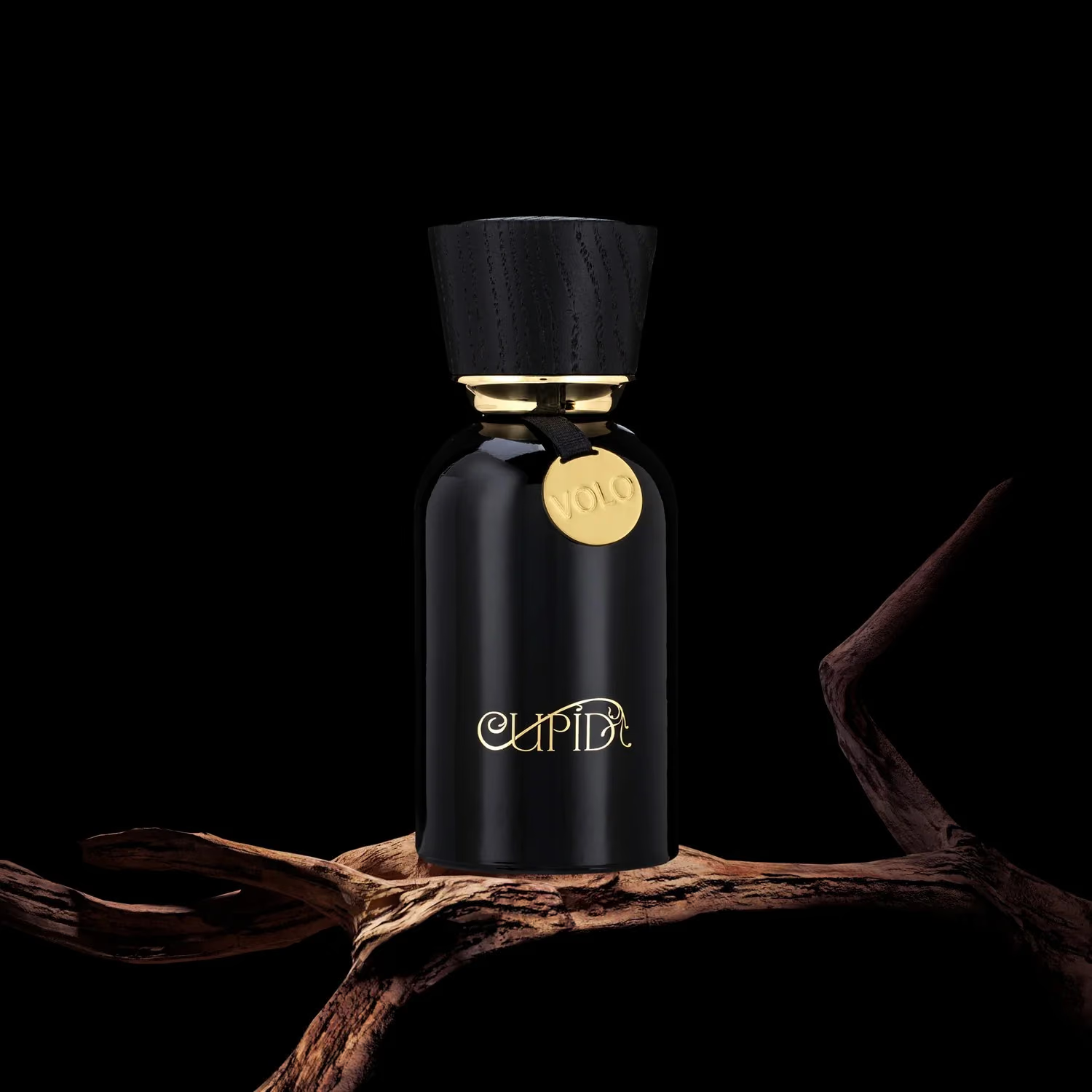
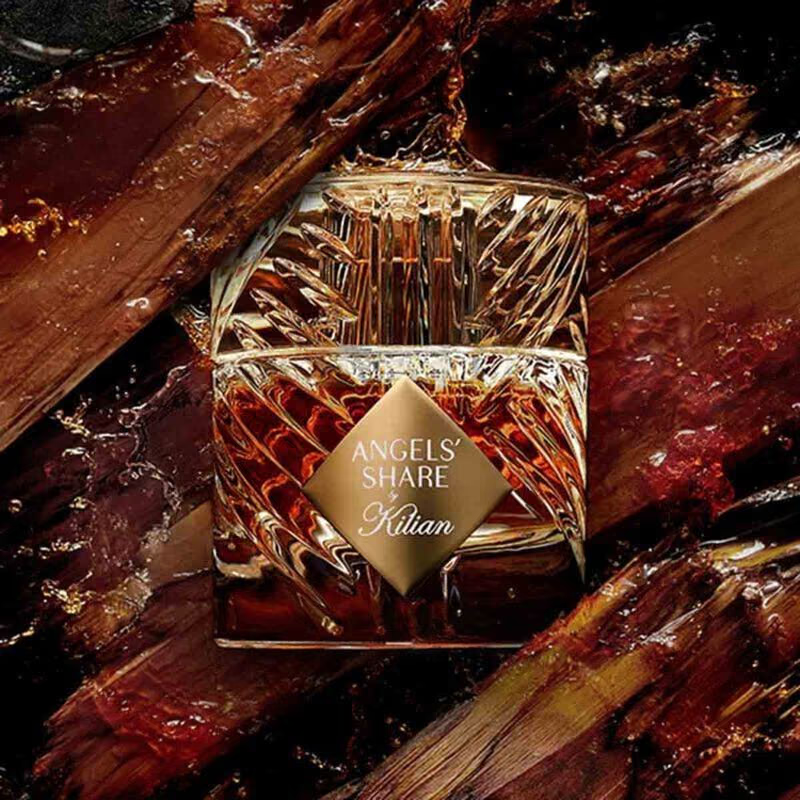
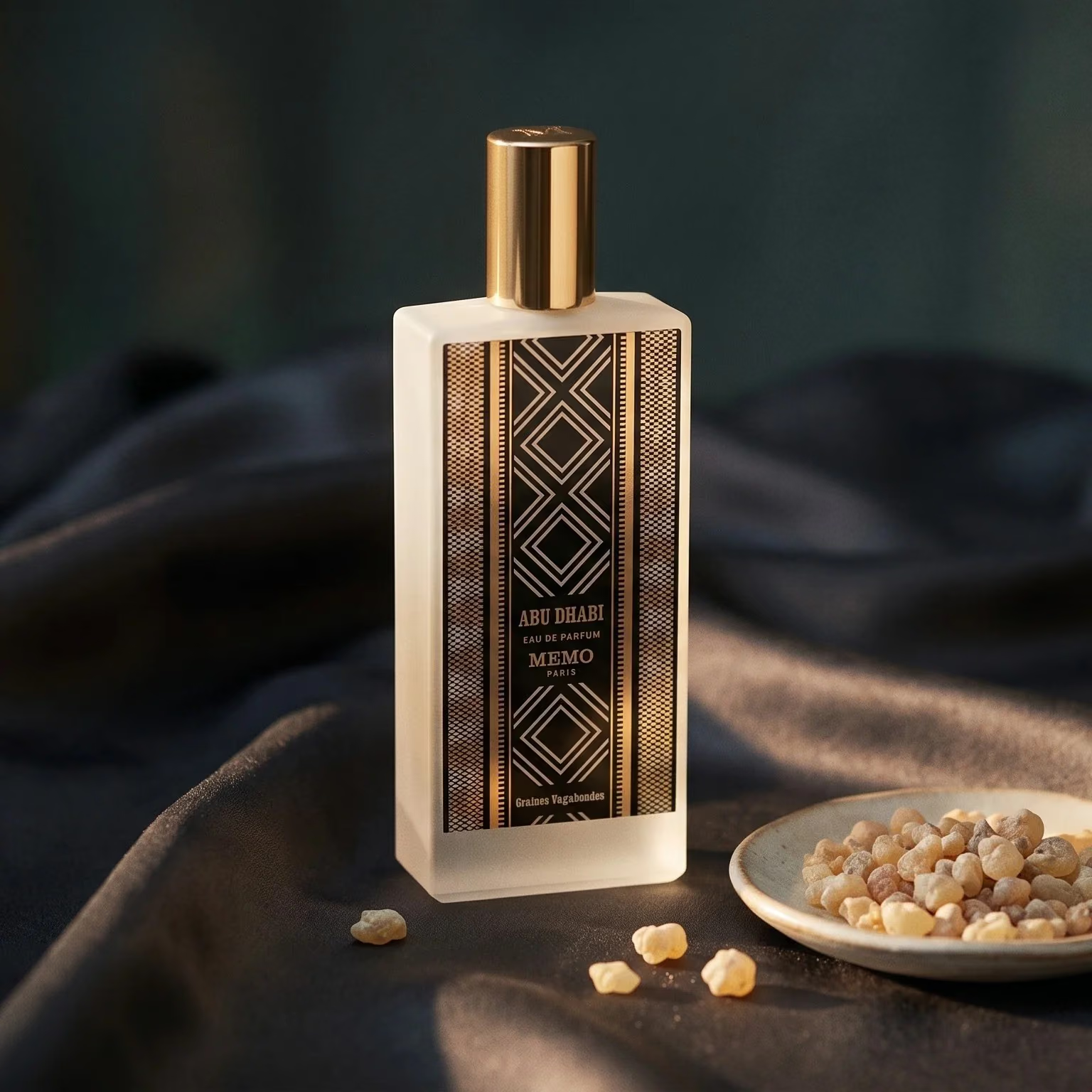
The pattern is recognisable. A web address structured like a brand section. A page title that begins with a house name and nothing else. The house's logo used as a header lockup. Campaign photography lifted wholesale. Grids that mirror the official layout. Alt text written as though the publisher owned the juice. Individually, each of these looks like ordinary merchandising. Together they produce a page whose implicit claim is that you have arrived at the house, and the visitor reads that claim before they read a single sentence.
That is bad in three separate ways. It is bad for the visitor, who has been handed a false frame and will feel misled when they find a different phone number and a different promise. It is bad for the publisher, because trademark and advertising rules take a dim view of implied affiliation, and search engines have been explicit for years that impersonating a business is a quality problem rather than a clever tactic. And it is bad for the brand, which invests heavily in one specific presentation and did not agree to this one.
The alternative is not silence. Refusing to name any house at all is a strange kind of dishonesty — it makes writing about fragrance nearly impossible, and it helps nobody who is searching. The workable rule is narrower: name a house when the house is the subject of a sentence, not when the name is decoration.
In practice that means a few things. Write about a fragrance as an example, in body copy, where it can be discussed properly. Do not build brand index pages you cannot keep accurate — there is a note on why lists go stale in the journal. Do not use official imagery as though it were yours. Do not put a house name at the front of a title as though the page belonged to them. And make the identity of whoever is publishing unmistakable early, in plain language, so nobody has to guess.
Done that way, naming Chanel or Dior or Louis Vuitton inside a paragraph is exactly what it looks like: a reference point, used because it is the vocabulary readers already have. The reader learns something, the search is answered honestly, and nobody is confused about whose door they walked through. On this site, the about page is where that identity question gets its plain answer.
And if the fragrance you searched for is already in your head, the useful next step is not another page but a person. You will find one through contact.