Journal
2026-08-14 · 4 minHow scent is named across languages
عطور, perfume, cologne, عود — one bottle carries different names in different scripts. A short guide to searching and describing across languages.
The same bottle has different names depending on who is looking for it, and a surprising amount of frustration in fragrance comes from that fact alone.
Start with English, which is the least precise of the languages involved. Cologne, in everyday American usage, means men's fragrance in general — a folk meaning laid on top of a technical one. Eau de cologne is a concentration, a low one, and also a genre: the citrus, neroli, rosemary and lavender structure that came out of eighteenth-century Cologne and became a European standard. So the word can mean a category of buyer, a strength, or a style, and the three do not overlap neatly. Perfume is similarly loose. In strict use it means the highest concentration; in ordinary use it means any fragrance; and in a lot of English-speaking contexts it quietly means women's fragrance. Fragrance and scent are the safest neutral words, which is why the trade tends to reach for them.
Arabic is precise where English is vague, and vague where English is precise. عطر is the general word and عطور its plural, and both do the work that fragrance does. But the vocabulary then branches by carrier and by ritual in ways English simply cannot. عود is the wood and the material. دهن العود is the oil pressed from it. بخور is what is burned. مخلط is a blend. These are not synonyms in different registers — they are different physical objects used at different moments. Anyone raised with that vocabulary finds perfume a strangely flat word, because it collapses four things into one.
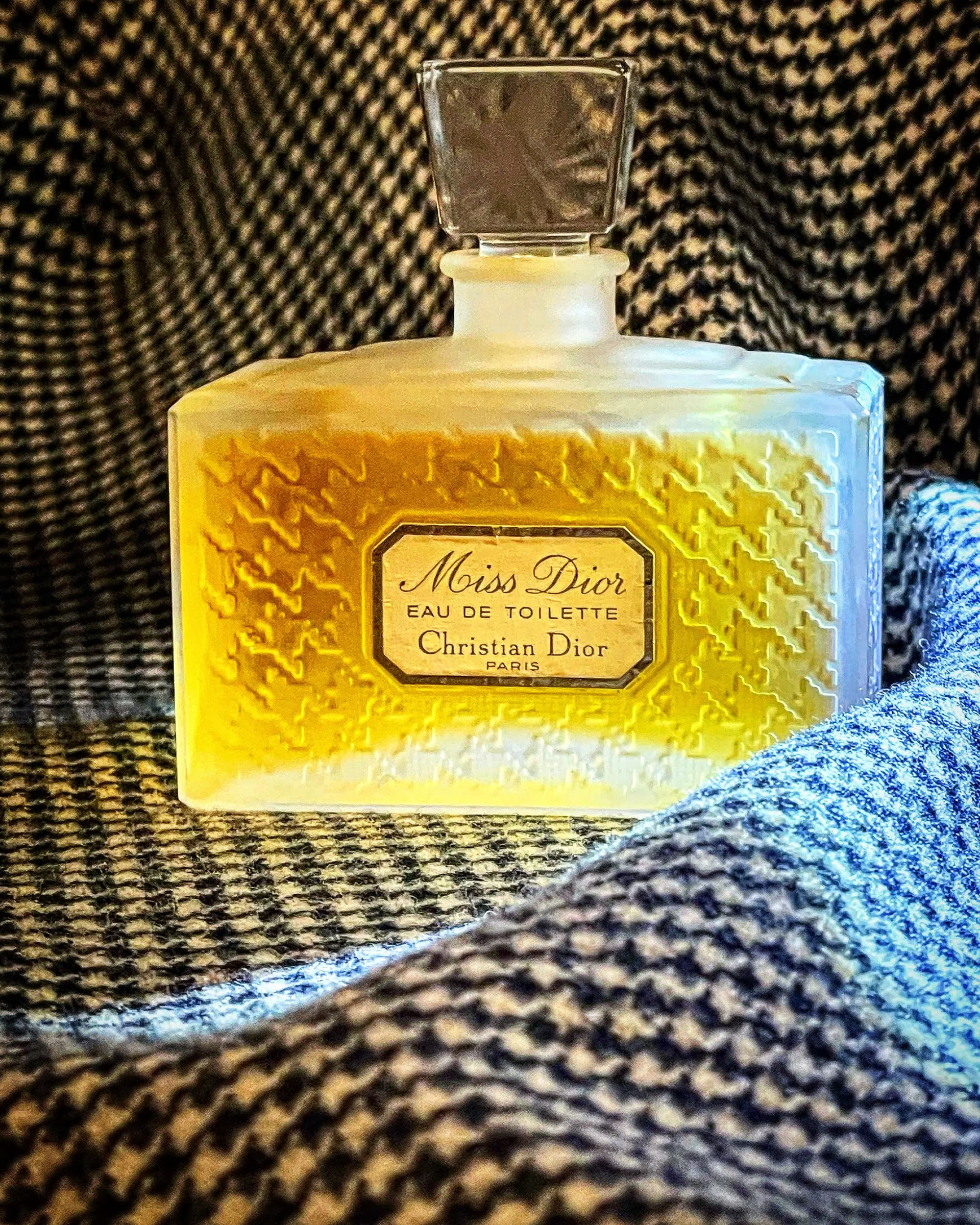
French sits underneath all of it as the technical layer. Parfum, eau de parfum, eau de toilette, extrait: these terms appear on cartons worldwide regardless of the language spoken around them, which means a great many buyers read a French word every day without ever treating it as French.
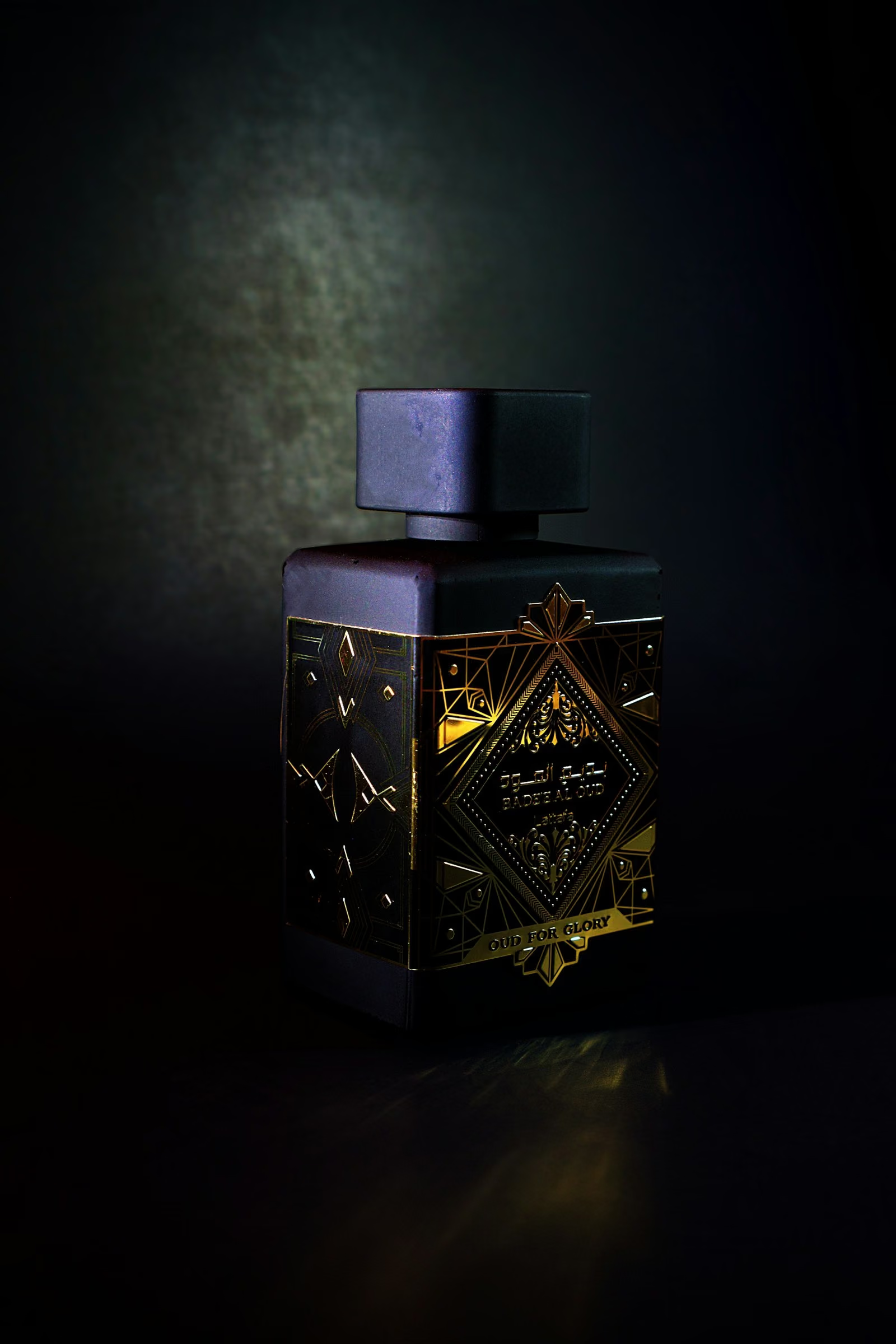
Then there is transliteration, which is where searches actually break. Lattafa's Oud for Glory is a good demonstration. It is printed in Latin letters on the box, searched in Arabic as لطافة and عود فور جلوري, and also widely known by a second name entirely, since the same juice has circulated under more than one label. Somebody searching one string sees a completely different set of results than somebody searching another, for the identical bottle.
Chanel No. 5 has the same problem in a quieter form. It appears as No 5, No. 5, N°5, Number 5, and in Arabic as شانيل رقم 5. The degree sign, the full stop, the space and the ordinal all fragment a search. Anyone who has tried to compare information across scripts has watched half a conversation vanish because of a punctuation mark.
A few practical habits follow.
Search twice, in both scripts. If you read Arabic and English, run the query in each. The results are not translations of one another, and the communities behind them discuss different things — Arabic-language discussion tends to be richer on oud, oils and layering, while English-language discussion tends to be richer on designer launches and batch comparisons.
Search the family, not only the name. Describing what you want in category terms travels across languages far better than a brand string does, and it survives transliteration entirely.
Give both names when you write to someone. If you know a fragrance under two labels, say both. It costs one line and removes an entire round of confusion.
And expect the concentration words to be the stable part. Whatever language a conversation is in, eau de toilette and eau de parfum mean the same thing everywhere, and anchoring on them gives two people a shared foothold even when nothing else in the sentence matches.
The community references are worth reading in both directions too. Fragrantica publishes in several languages, and reading the same note list twice, in two of them, is a decent way to build a bilingual glossary. There is a related note in the journal on describing a fragrance in words rather than names.
And when you would rather say it in your own language and simply be understood, the contact page leads to people who read more than one.