Diario
2026-08-23 · 4 minLongevity and sillage, explained
Longevity, sillage and concentration are three different things. Baccarat Rouge 540, Sauvage Elixir and Montale show how they come apart in practice.
Three words get used as if they were synonyms, and almost every disappointed perfume purchase lives in the gap between them. Longevity is how long a scent stays detectable on your skin. Sillage is the trail it leaves behind you in a room. Concentration is how much perfume oil is dissolved in the alcohol. They are related. They are not the same, and one does not guarantee another.
Start with the most common misunderstanding. People say “I want something strong” and mean four different things: something that lasts twelve hours, something people notice across a table, something dense and heavy in character, or something with a high oil percentage. A perfume can be dense and quiet. It can be loud for two hours and gone by lunch. Saying which of the four you actually want is the fastest way to be understood by anyone who sells fragrance.
Longevity is mostly decided by the base. Heavy, slow-evaporating materials — vetiver, patchouli, oud, labdanum, vanilla, most musks, and modern woody-amber molecules — stay on skin because they simply do not want to leave. A perfume built mainly from citrus and light aromatics can be beautiful and will still be finished in two hours. That is chemistry, not a defect, and no amount of money fixes it.
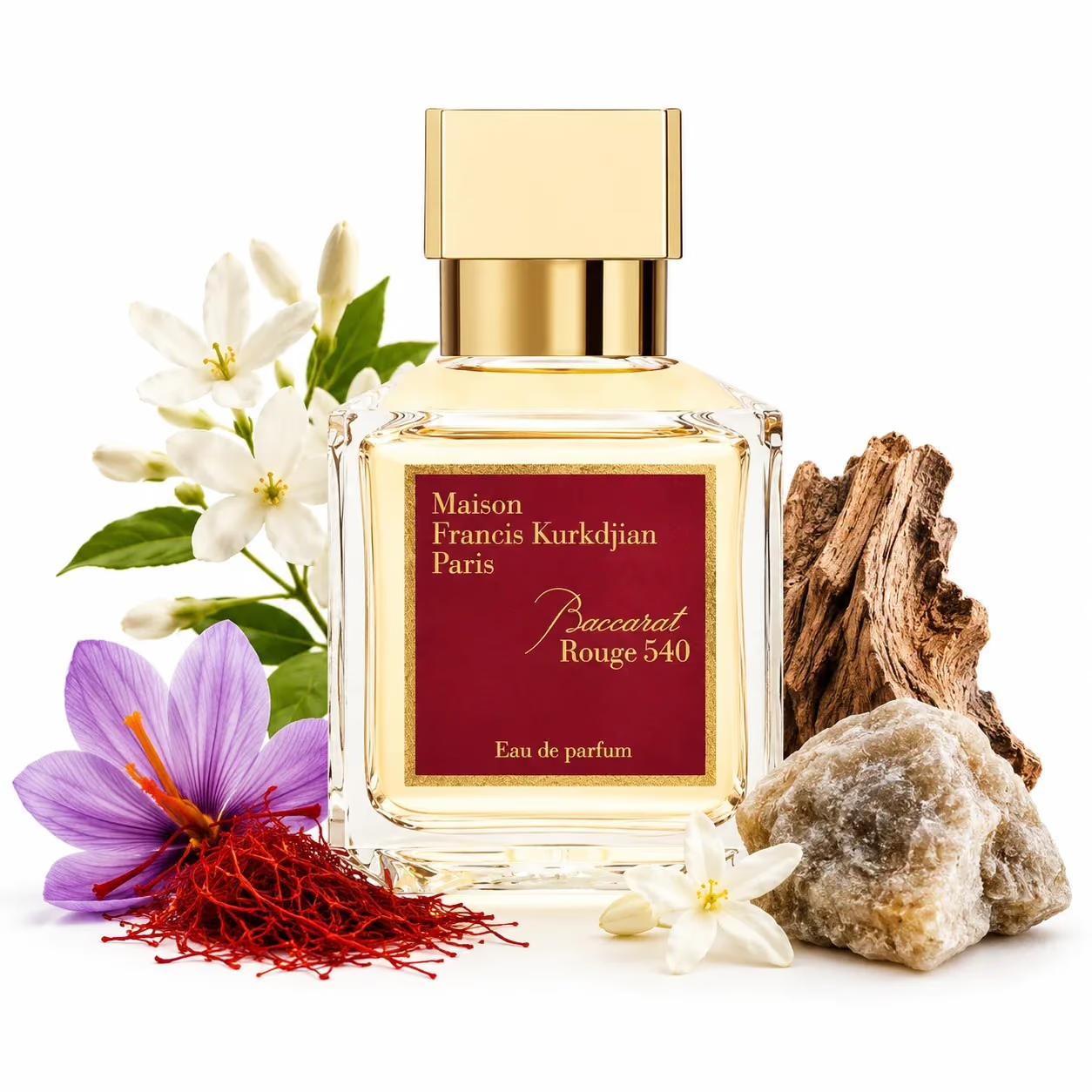
Sillage is a different mechanism. It depends on materials that diffuse — that travel through air rather than clinging. Some molecules are enormous projectors at low doses. This is why a fragrance can be quiet on your own skin, because you have gone nose-blind to it, and perfectly obvious to someone entering the room. Maison Francis Kurkdjian Baccarat Rouge 540 is the modern textbook case: a juice that smells light and almost transparent up close, built around a saffron-and-ambergris-type accord with a huge diffusive woody-amber base, which is exactly why it developed a reputation for filling rooms. Its reputation is about sillage, not about weight.
Concentration is the third axis, and the one most often misread. Eau de toilette, eau de parfum, extrait and parfum describe roughly how much concentrate is in the bottle, though the ranges overlap and no house is bound to a fixed number. More importantly, the higher concentration of the same name is usually not the same perfume made stronger. It is frequently a different formula. Dior Sauvage and Sauvage Elixir are the clearest mainstream example: the Elixir is not simply a louder Sauvage but a denser composition, thick with lavender, spice and a liquorice-like warmth, behaving on skin like a relative rather than a twin. The general ladder is covered in EDP, EDT and extrait.
Then there is you. Dry skin holds fragrance badly because there is less oil for the molecules to sit in; moisturised skin holds it noticeably longer. Body heat pushes diffusion, so the same perfume is louder on a warm person and in a warm month. Diet, medication and skin pH all get blamed, sometimes fairly. The reliable, boring advice is to apply to clean moisturised skin, on pulse points, and to stop rubbing your wrists together — that crushes the top notes and does nothing useful.
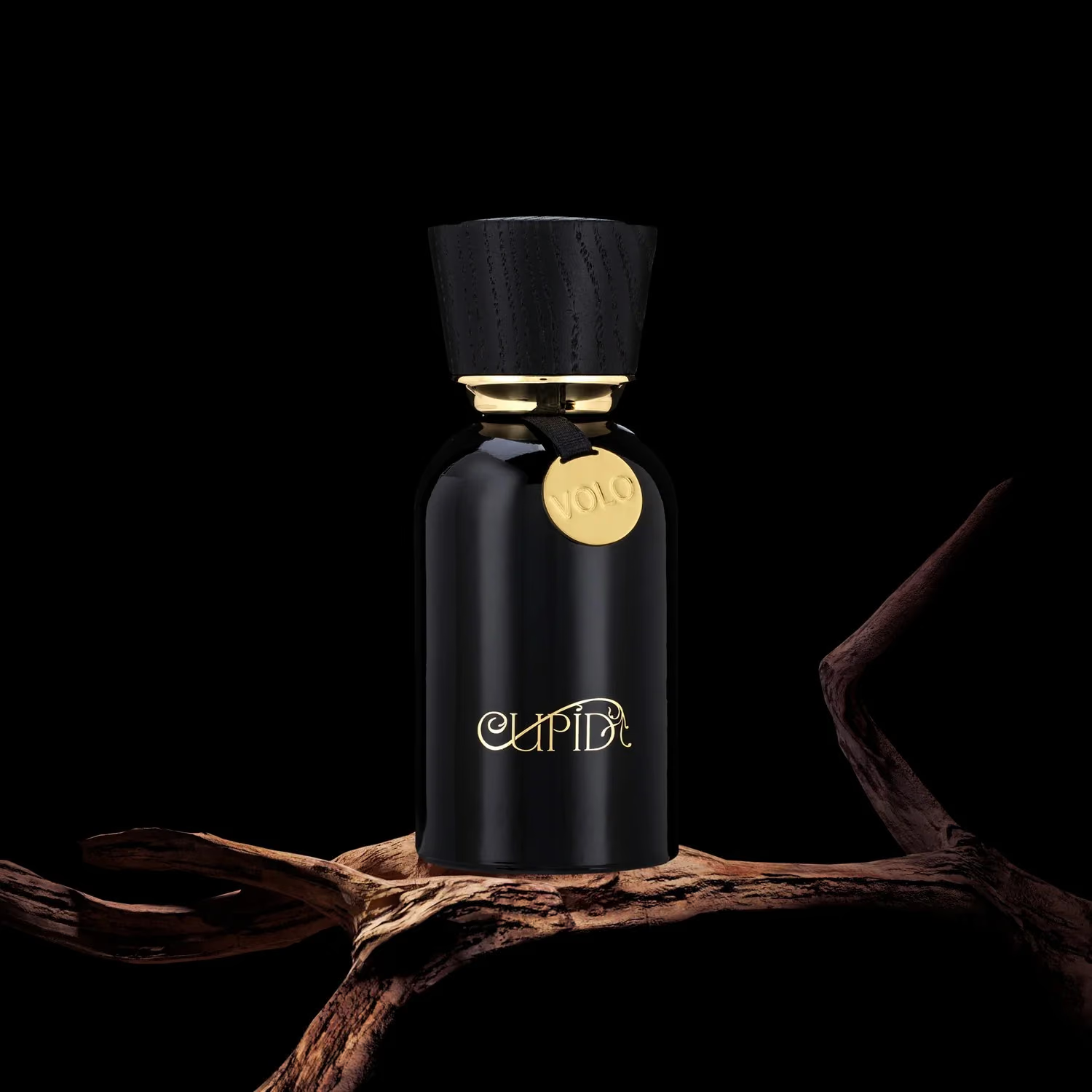
Some houses build deliberately for maximum output. Montale is the reference name here: dense oud, rose and fruity-chypre constructions in aluminium bottles, made in a register where restraint is not the goal. Whether that is elegance depends entirely on the room you are walking into. An office is not a wedding, and a hot afternoon is not a cool evening — the point made in heat and the life of a fragrance.
Two practical corrections. First, spraying more is not the same as lasting longer. Beyond a certain point you are only increasing sillage, and usually past the point other people enjoy. Second, fabric holds scent far longer than skin, so a perfume sprayed on a scarf can survive a week while the same perfume on a wrist is gone by dinner. If someone tells you a fragrance lasted eighteen hours, ask what it was sprayed on.
Finally, longevity is a terrible authenticity test on its own. Counterfeits often fail on exactly this axis, but so do plenty of genuinely light, expensive perfumes, and a heavy fake can outlast a delicate original. Use the whole picture instead — the method in how to spot original perfume is more reliable than a stopwatch.
Say what you want in those three words — hours, trail, density — and any competent seller can narrow the field immediately. Say “strong” and you will be handed somebody else’s taste.
If you would like that conversation with a person instead of a comparison chart, message Ahmad or Khaled on WhatsApp, or use the contact page.