Diario
2026-08-25 · 4 minOud explained: from tree to bottle
What oud actually is, why real agarwood is rare, and how Tom Ford Oud Wood, Lattafa Oud for Glory and Montale represent three different oud styles.
Oud is the only major perfume material that begins as an injury. The tree is Aquilaria, a fairly ordinary evergreen that grows across South and Southeast Asia. Its wood is pale, light and smells of almost nothing. When the tree is wounded and a particular mould colonises the damage, it defends itself by saturating the affected heartwood with a dark, dense resin. That resinous wood is agarwood — oud. A healthy Aquilaria is worthless to a perfumer. A sick one, over years, becomes one of the most expensive raw materials on earth.
That is the first thing to understand about its scarcity: infection is unpredictable, slow, and destructive to sample. Historically, finding resinated wood meant cutting trees down to look. Wild populations were reduced so heavily that wild agarwood is now protected under international trade rules, and the overwhelming majority of oud in commerce comes from plantations where trees are deliberately inoculated. Cultivated oud is real oud. It is simply younger, more consistent and less mythologised than the wild material collectors talk about.
The wood is used in two forms. Chips are burned — on charcoal, in a mabkhara, as bakhoor — and this is a domestic ritual as much as a fragrance, older in the Gulf than any bottle. Or the wood is soaked and distilled into dehn al oud, an oil applied in tiny quantities directly to skin or clothing. A good distillation smells of leather, smoke, barnyard, dried fruit, honey, wet earth, and sometimes something frankly medicinal. It is not a pleasant scent in the way a floral is pleasant. It is an interesting one, which is why people spend decades on it.
Regional styles are real and worth knowing. Cambodi oud tends to be sweeter, fruitier, softer. Hindi oud from India is the famously animalic, sharp, almost feral style that beginners find alarming. Malaysian and Indonesian ouds sit in between, often woodier and greener. Two oils from the same species can smell like different materials depending on soil, age, infection and distillation method — closer to wine than to a chemical commodity.
Now the honest part. Most perfumes with “oud” on the box contain little or no distilled agarwood. They use synthetic oud accords and woody-amber molecules that give the smoky, resinous, medicinal impression at a fraction of the cost and with total consistency batch to batch. This is not a scandal. It is how the category became global. But it does mean “oud” on a label describes a style far more often than a material.
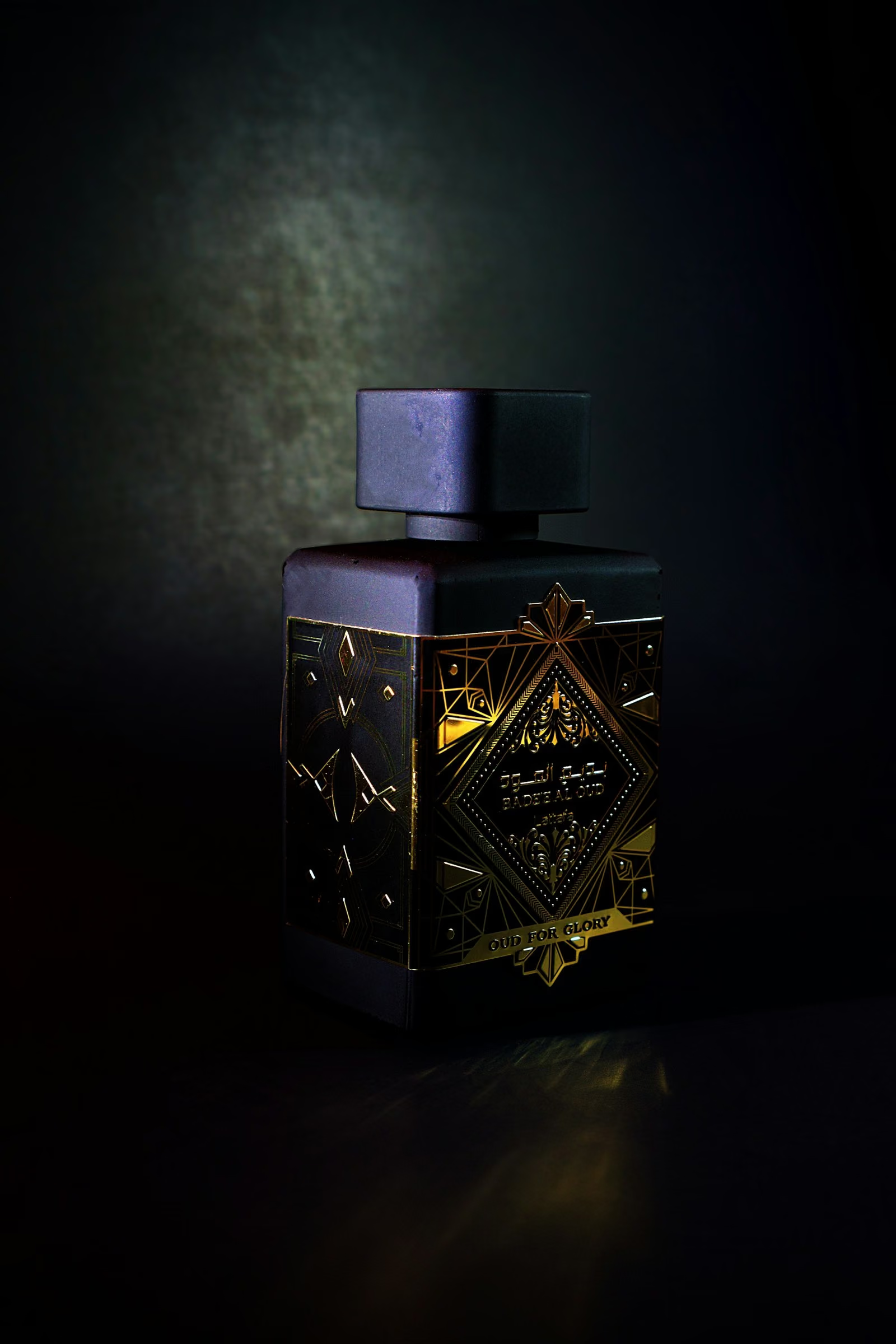
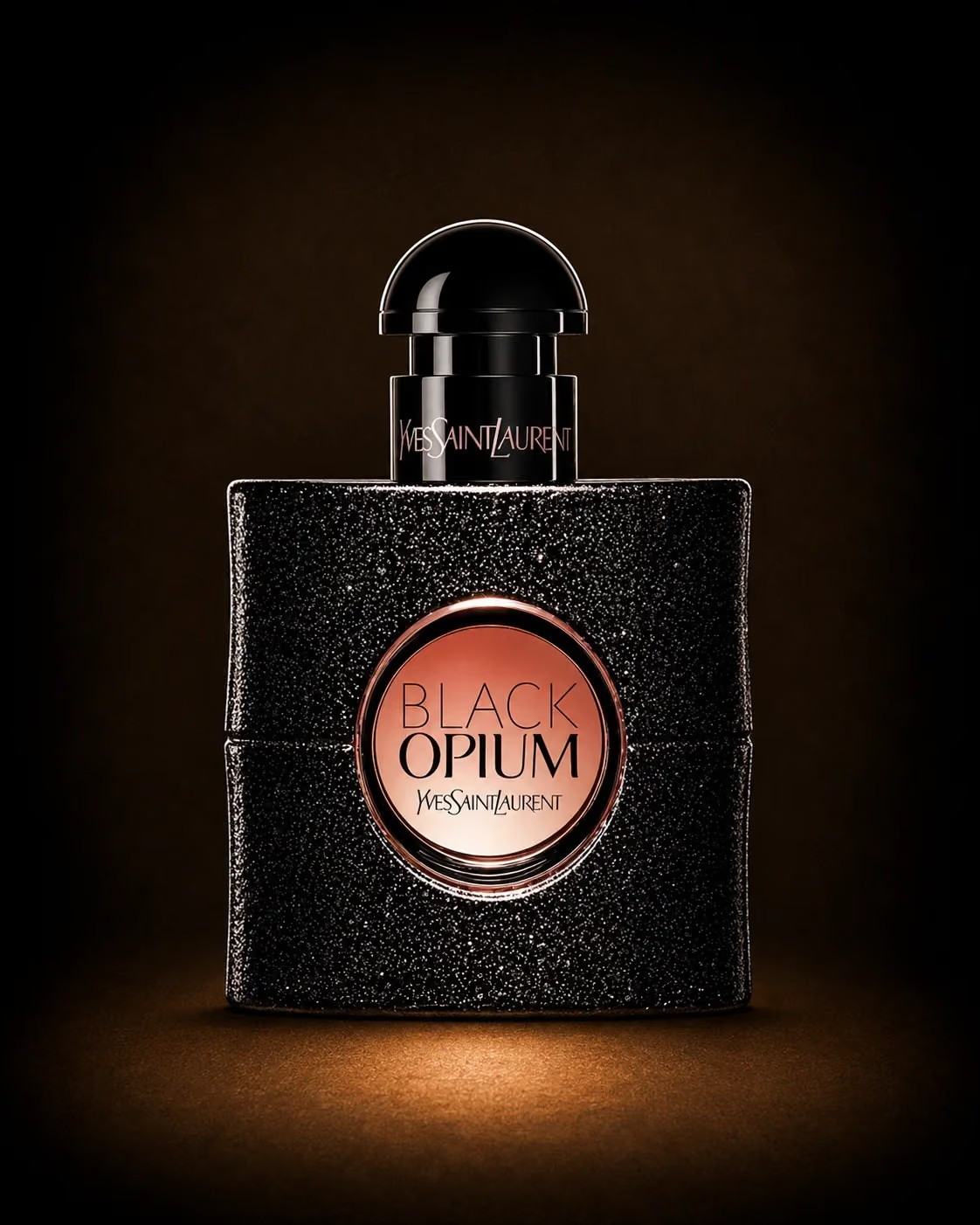
Three bottles map the styles clearly. Tom Ford Oud Wood, from 2007, is the Western gateway: oud made polite, wrapped in sandalwood, rosewood and cardamom until it reads as a warm, smooth, slightly smoky wood that offends nobody in an office. Lattafa Oud for Glory is the contemporary Gulf reading — darker, smokier, sweeter, unmistakably built for a nose raised on bakhoor rather than on eau de toilette. Montale built an entire catalogue in a third register: enormous, saturated oud-and-rose constructions with no interest whatsoever in restraint. Amouage, working from Oman, represents a fourth approach again, closer to formal European composition using Arabian materials — worth smelling if you ever get the chance, even though there is no photograph of it on this page.
For anyone selling, the practical lesson is that “oud” is not a customer request. It is a category. The person asking may want dehn al oud for their own skin, a smoky designer wood for the office, a rose-oud for a gift, or bakhoor for the house. Those are four separate conversations, and the trade side of that split is discussed in oud and oriental in wholesale.
There is also a wearing etiquette that no product page teaches. Real oud oil is applied in very small amounts and grows for hours. Spraying an oud-heavy perfume the way you would spray a citrus cologne is how people end up remembered badly. Heat amplifies all of it, which the note on heat and the life of a fragrance covers in more detail.
Learn the difference between the material and the style and the whole category stops being intimidating. You will also stop overpaying for the word itself, which appears on plenty of bottles that contain nothing of the tree.
When you want to talk through what kind of oud you are actually looking for, write to Ahmad or Khaled on WhatsApp, or send a note from the contact page.