Diario
2026-08-20 · 5 minFragrance families explained
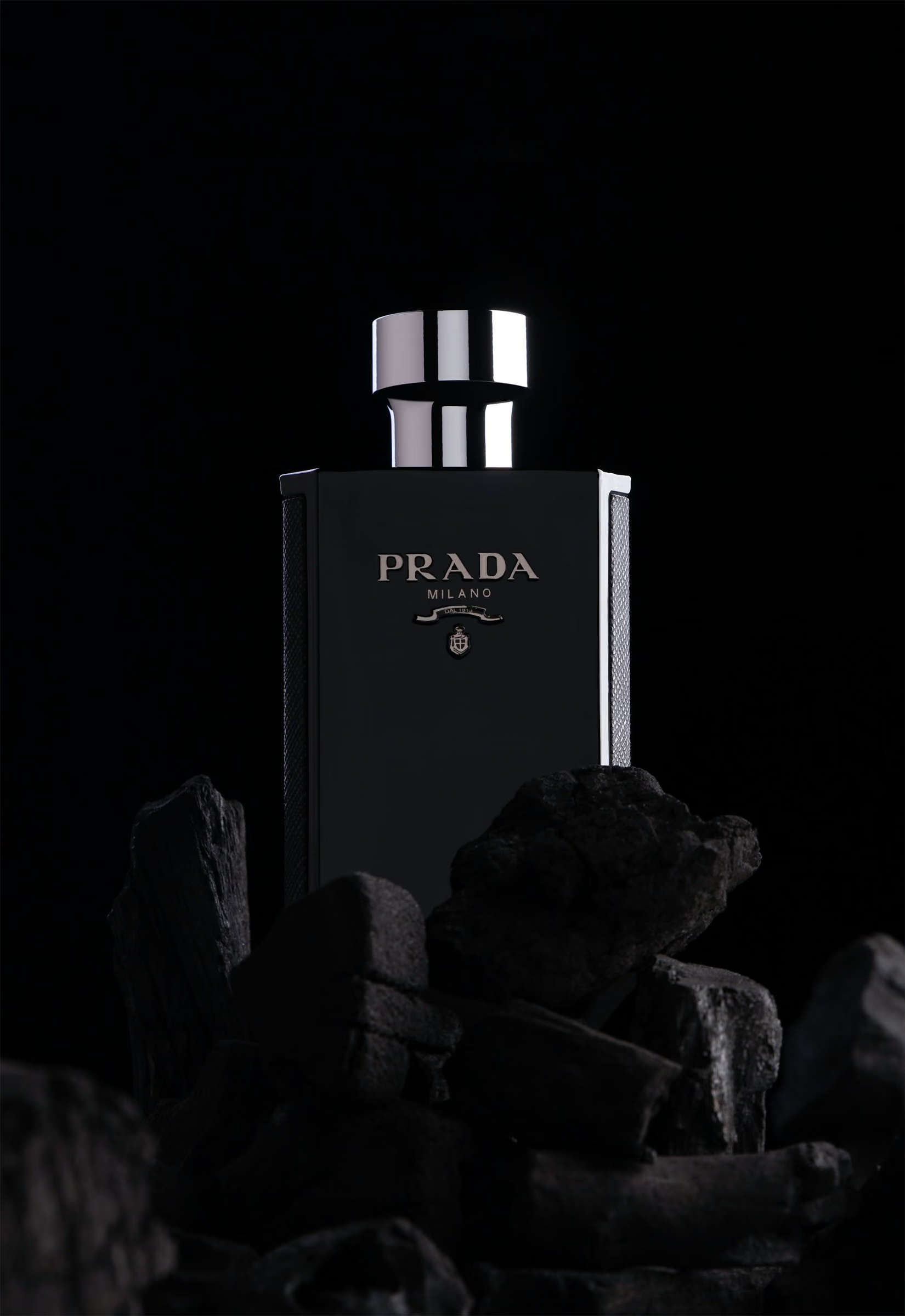
Floral, fougère, chypre, amber and woody explained through Chanel N°5, Dior Sauvage, Creed Aventus and Tom Ford — and how to use the map when you buy.
Ask ten people to describe a perfume and you will hear ten vocabularies. One says fresh. One says strong. One says it smells like a grandmother’s dressing table in 1994. None of those answers is wrong and none of them helps anyone find the next bottle. Fragrance families exist to solve exactly that problem: a rough, endlessly argued map of how scents are built, agreed on widely enough that two strangers can point at the same region and mean roughly the same thing.
Start with floral, the oldest and widest country on the map. Rose, jasmine, tuberose, orange blossom — drawn either realistically, like a garden at a specific hour, or abstracted into something no garden ever produced. Chanel N°5 is the famous example of the second approach. It is usually filed as floral-aldehyde, which is a technical way of saying that a group of synthetic materials called aldehydes was laid over the flowers like frost over a field. They read as soapy, waxy, faintly metallic, and they are the reason the perfume smells like an idea of a woman rather than a bouquet. That decision is more than a century old and it still anchors the family.
Next comes the aromatic fougère, the family most modern men’s perfume lives in without announcing it. Fougère means fern, which is a small joke, because ferns do not smell of anything. The structure is lavender, something herbal or green, a bright citrus opening and a woody-mossy floor. Dior Sauvage sits here: bergamot at the top, a peppery aromatic middle, and a large dose of ambroxan underneath that produces the clean, mineral, almost radioactive drydown people either love or are exhausted by. If you have ever said “everything smells like this now,” this family is what you meant.
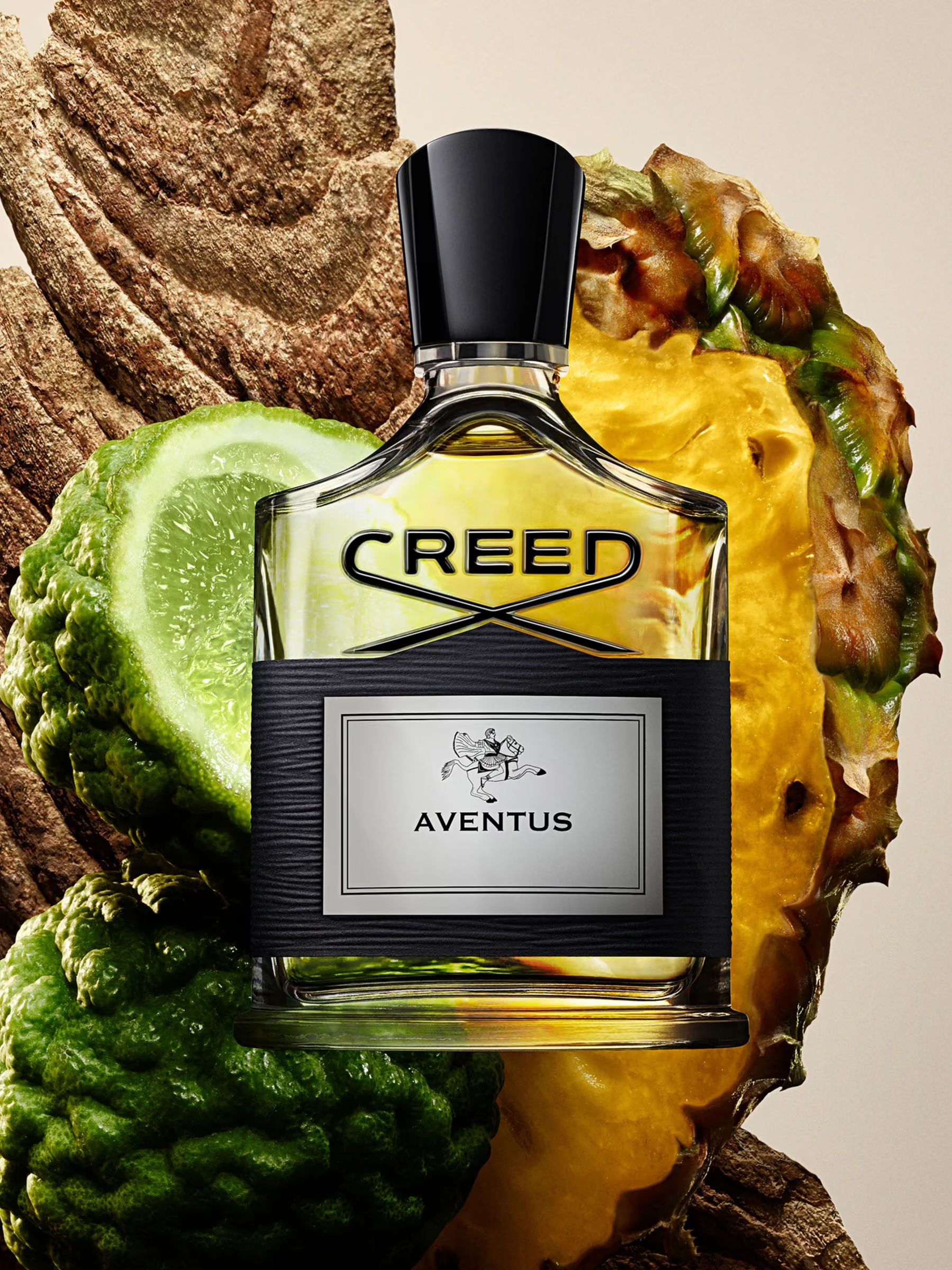
Chypre has the most beautiful name and the worst public explanation. It is a contrast structure: citrus above, floral or fruity in the middle, and a base of oakmoss, labdanum and patchouli that reads dry, bitter and green. Creed Aventus is the modern fruity chypre almost everyone has smelled — pineapple and blackcurrant over birch tar smoke, resting on that mossy floor. It rewards being smelled as a lesson and not only as a status object, because it shows exactly how a bright fruit is made serious by a dark base.
Then the amber-oriental group, now often called simply amber or ambery-woody. Resin, vanilla, benzoin, labdanum, spice and wood, built for density rather than lift. Tom Ford Tobacco Vanille is the sweet, pipe-tobacco end of it. Ombré Leather is the drier end, where leather and a woody-floral heart do the work that vanilla does elsewhere. Both behave very differently in a cold room than on a July afternoon, which is a subject of its own in heat and the life of a fragrance.
Woody covers cedar, vetiver, sandalwood, oud and the enormous modern family of synthetic woods. Fresh covers citrus, aquatic and green — the summer end of the shelf. Gourmand, a newer branch, covers everything edible: caramel, coffee, almond, praline. Most bottles are hybrids of two or three of these. That is not a flaw in the map. It is the point. A family is a starting direction, not a passport.
You should also know that nobody fully agrees on the borders. The most cited system is Michael Edwards’ fragrance wheel, built for the trade in the 1980s and revised many times since. Community databases classify differently again, and you can watch the argument happen live in the note breakdowns and votes on Fragrantica or in the older, calmer threads on Basenotes. When two sources disagree about whether something is a chypre or an ambery-woody, both may be defensible. The map is a convention, not a law of chemistry.
The practical value shows up in how you ask. “Something like Sauvage” gives a salesperson exactly one bottle to think about. “Something aromatic and fresh with a clean woody base, but less sweet” gives them a whole region — and that request survives the day that one bottle is not the answer. The same trick makes buying for another person far less frightening, which is half the argument in gifting perfume without a script.
One warning before you use any of this. Family is not concentration and it is not quality. A floral in eau de toilette and the same floral in extrait can feel like two different perfumes, and neither is more authentic than the other. That distinction gets its own note in EDP, EDT and extrait, and it usually explains the complaint that a scent “disappeared” better than the family label does.
Learn four or five families properly and you stop shopping by advertisement. You start describing what you actually want, which is the only reliable way to be understood by anyone selling.
If you would rather work that out in a conversation than in a chart, write to Ahmad or Khaled on WhatsApp about original perfume, or open the contact page and begin there.