Journal
2026-08-11 · 4 minAsking for a perfume in words
How to describe a fragrance in a message so the person answering understands you: families, anchors, concentration, and what to leave out.
Most fragrance conversations fail for a boring reason: the two people are not describing the same thing. One says something fresh; the other hears citrus; the asker meant clean, soapy and white. Fifteen messages later nobody has moved. The fix is vocabulary, and it takes about ten minutes to learn enough of it.
Start with the note pyramid, and start by not trusting it too much. Top, heart and base is a marketing convention from the early twentieth century, not a description of chemistry. Materials do not queue politely; they evaporate at overlapping rates, and a published note list is a mood board as often as an ingredient list. That said, the pyramid is a shared language, and shared language is worth more than accuracy here. Use it, and know what it is.
Families are more useful than notes, and a handful of them covers most of what anyone wears. Citrus-aromatics: the fresh, herbal territory of cologne structures and fougères. Florals, from single-flower soliflores to abstract bouquets. Chypres, built on a bergamot opening over a mossy, earthy base — the architecture behind a great deal of twentieth-century perfumery. Ambers, often still called orientals, warm with resins, vanilla, spice and balsams. Woods, meaning sandalwood, cedar, vetiver, and the modern woody-amber materials that dominate contemporary launches. Gourmands, which smell of edible things. Leathers, which run from smoky and tarry to soft and suede-like. Naming your family narrows a conversation faster than any three notes will.
Then give an anchor. The most efficient message in this trade is a known fragrance plus a direction. Like Sauvage, but less sweet. The same freshness, more wood, less pepper. Something in that territory but for the evening. An anchor works even when the person answering does not have that bottle in front of them, because they know what it smells like and can triangulate from there.
Sauvage is worth using as the worked example, because it demonstrates the next problem. It is not one fragrance. The eau de toilette is bright — bergamot, pink pepper, and a generous dose of ambroxan, the clean, salty, mineral-woody material that made the modern fresh-woody genre possible. The eau de parfum is rounder and more vanillic. The Elixir is dense and spiced, with liquorice and a much heavier base. Saying Sauvage without saying which one leaves the answer to chance, and the three are different enough that people who love one actively dislike another.
So say the concentration if you know it, and know what it means. Eau de cologne, eau de toilette, eau de parfum, extrait: the sequence describes a rising proportion of fragrance oil in alcohol, but it does not simply mean louder. Higher concentrations usually shift a composition toward its base, so an eau de parfum tends to be warmer and deeper rather than a bigger eau de toilette. Sometimes the two are genuinely different formulas wearing the same name.
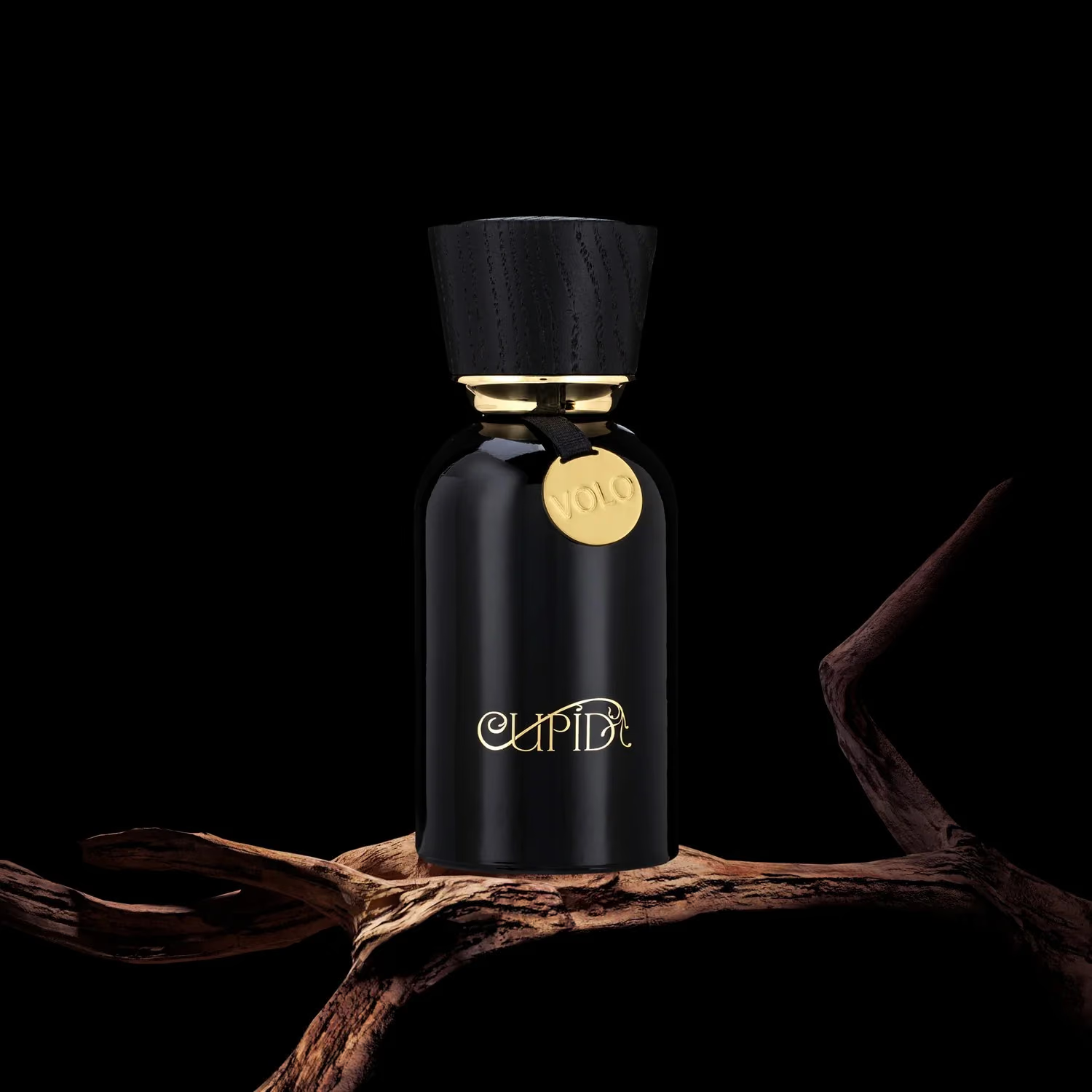
Say how you want it to behave. Plain language beats jargon here. I do not want people to smell me from across a room. It needs to last through a working day. I want it close to the skin. Projection and longevity are the two things people care about most and describe worst.
Say the conditions. Hot and humid, cold and dry, an office, an evening, a wedding. The same bottle performs differently in each, and anyone who has sold fragrance will adjust their answer the moment they know.
And say what you do not want. Negative information is often the fastest constraint of all. No sweetness. No oud. Nothing that reads as a men's shower gel. Nothing that smells like the one everybody at work is wearing.
What to leave out: long screenshot chains with no sentence attached, and a demand for a full inventory before you have said anything about yourself. Neither gives the person on the other side anything to work with.
If you want to build vocabulary before you write, Fragrantica and Basenotes are good for note listings and for reading how other people describe the same materials. Read them for words rather than rankings. There is a companion note in the journal on how these words shift between languages.
Once you have two or three sentences that actually describe what you want, sending them to a person is the fastest part of the whole process — and the contact page is where that message goes.