日志
2026-08-27 · 4 分钟Dupes, clones and fakes: the difference
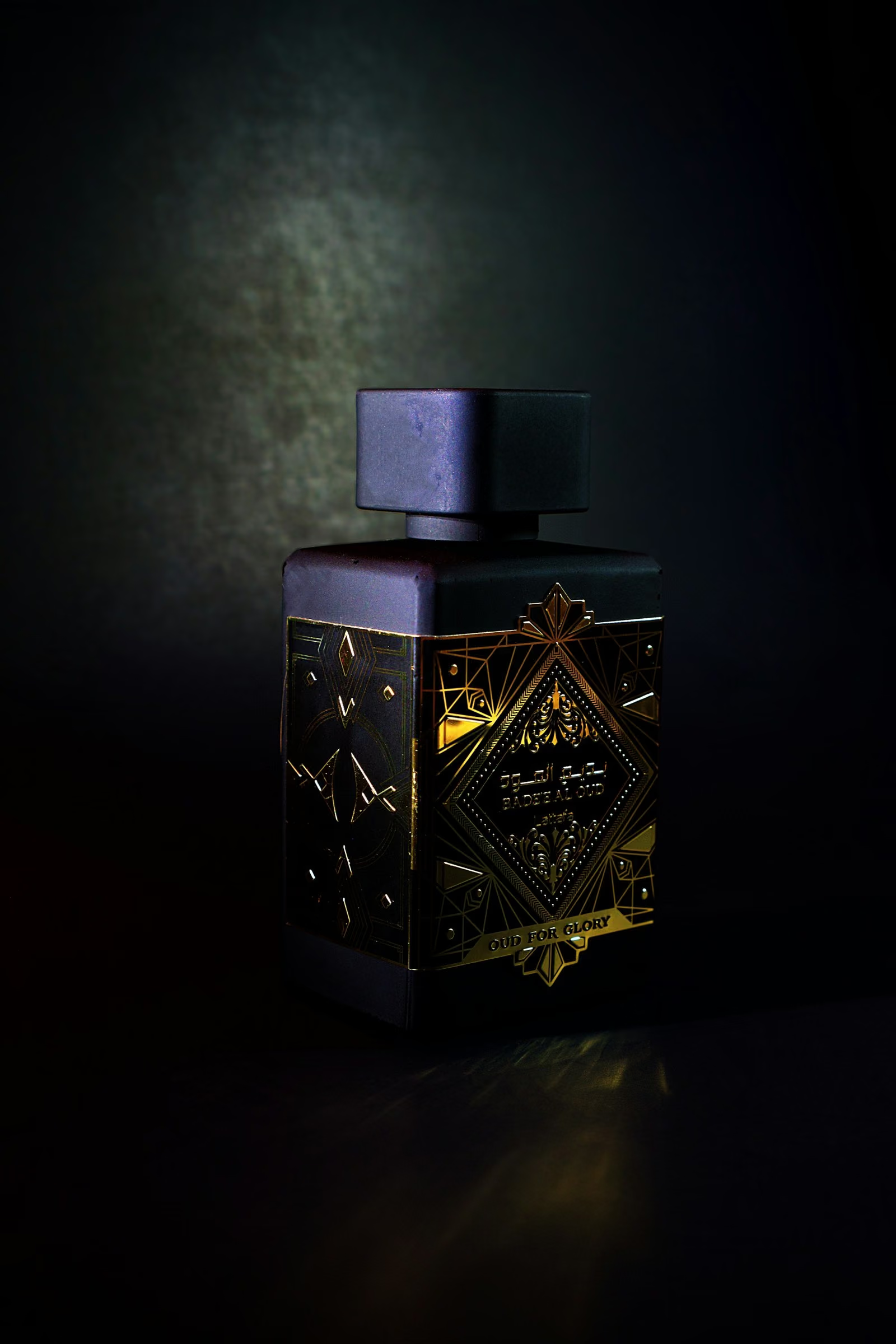
An inspired-by, a clone and a counterfeit are three different objects with three different ethics. Aventus and Lattafa make the distinction easy to see.
The words get thrown around as insults, which is a shame, because they describe three genuinely different objects. One is normal creative practice. One is aggressive commercial imitation. One is fraud. Collapsing them into a single sneer makes it harder to talk about the only one that actually harms buyers.
Begin with the “inspired by.” Perfume formulas are almost never protected the way a song or a logo is. An accord — a smoky pineapple, a coffee-vanilla, a rose-oud — can be reinterpreted freely, and it always has been. Fougère, chypre and the modern ambroxan-fresh style each exist because a successful idea was picked up by everyone. A perfume that follows a popular direction, is sold under its own name, in its own bottle, with its own branding, is not deceiving anybody. Much of the Gulf’s recent commercial success sits here. Lattafa’s widely discussed releases — Asad among them — are openly talked about in enthusiast forums as inspired readings of well-known directions, and they are sold as Lattafa, which is the entire point.
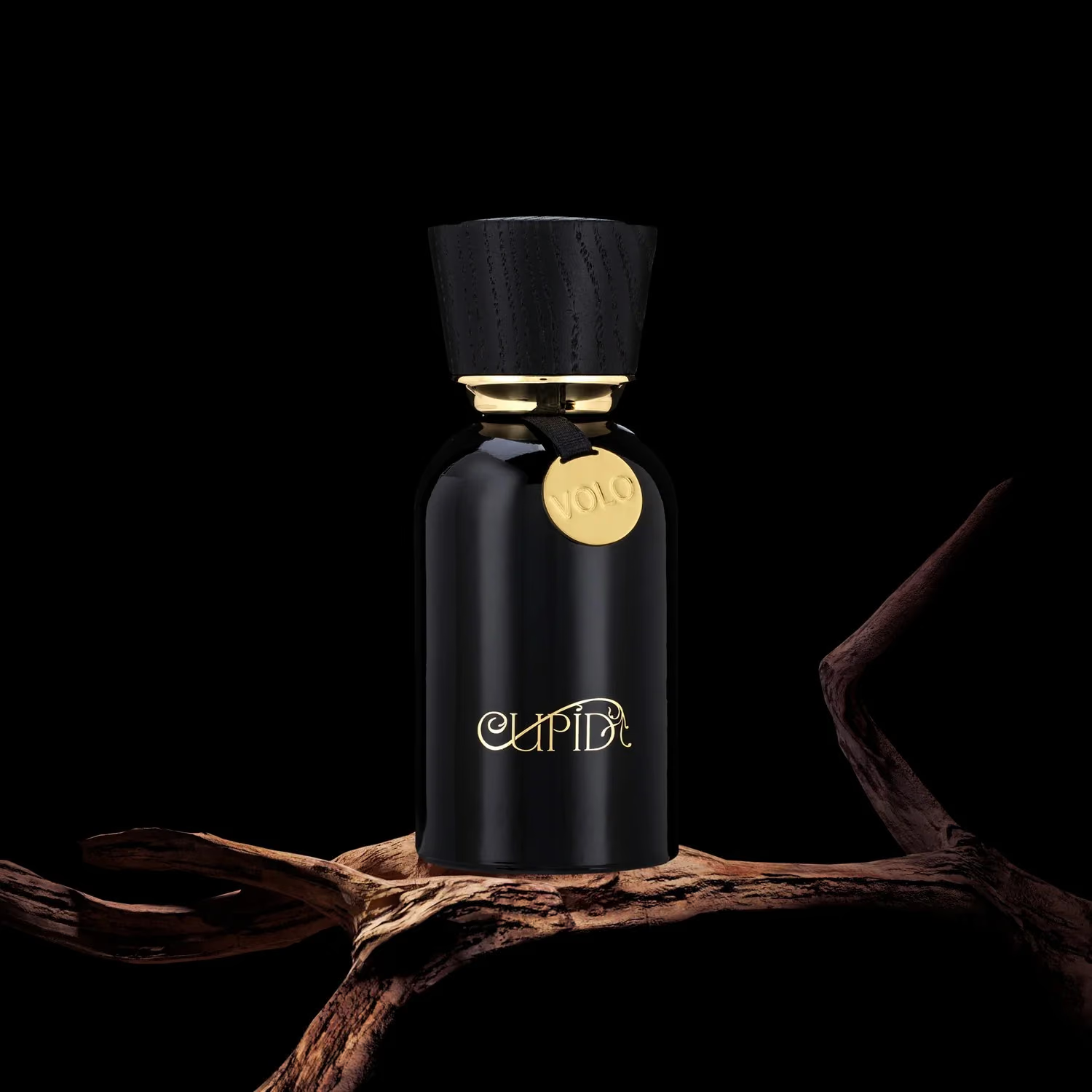
Second, the clone. This is the harder-edged version: a composition aimed as closely as possible at one specific target, sometimes marketed with a nudge and a wink, occasionally with comparison language on the retailer’s site rather than the box. It is legally awkward in places and ethically debated everywhere, but the crucial fact remains — the buyer knows what they are buying. Nobody thinks they have purchased the original. The transaction is honest even when the creativity is not.
Third, the counterfeit. This is a different species entirely. A counterfeit uses another company’s name, logo, bottle design and packaging in order to make you believe you have bought their product. It is trademark infringement, it is fraud, and it is the only one of the three that takes your money under false pretences. It is also the one with real safety exposure, because a counterfeiter has no reason to care what is in the liquid: unregulated production has produced everything from harmless cheap alcohol to material that irritates skin badly.
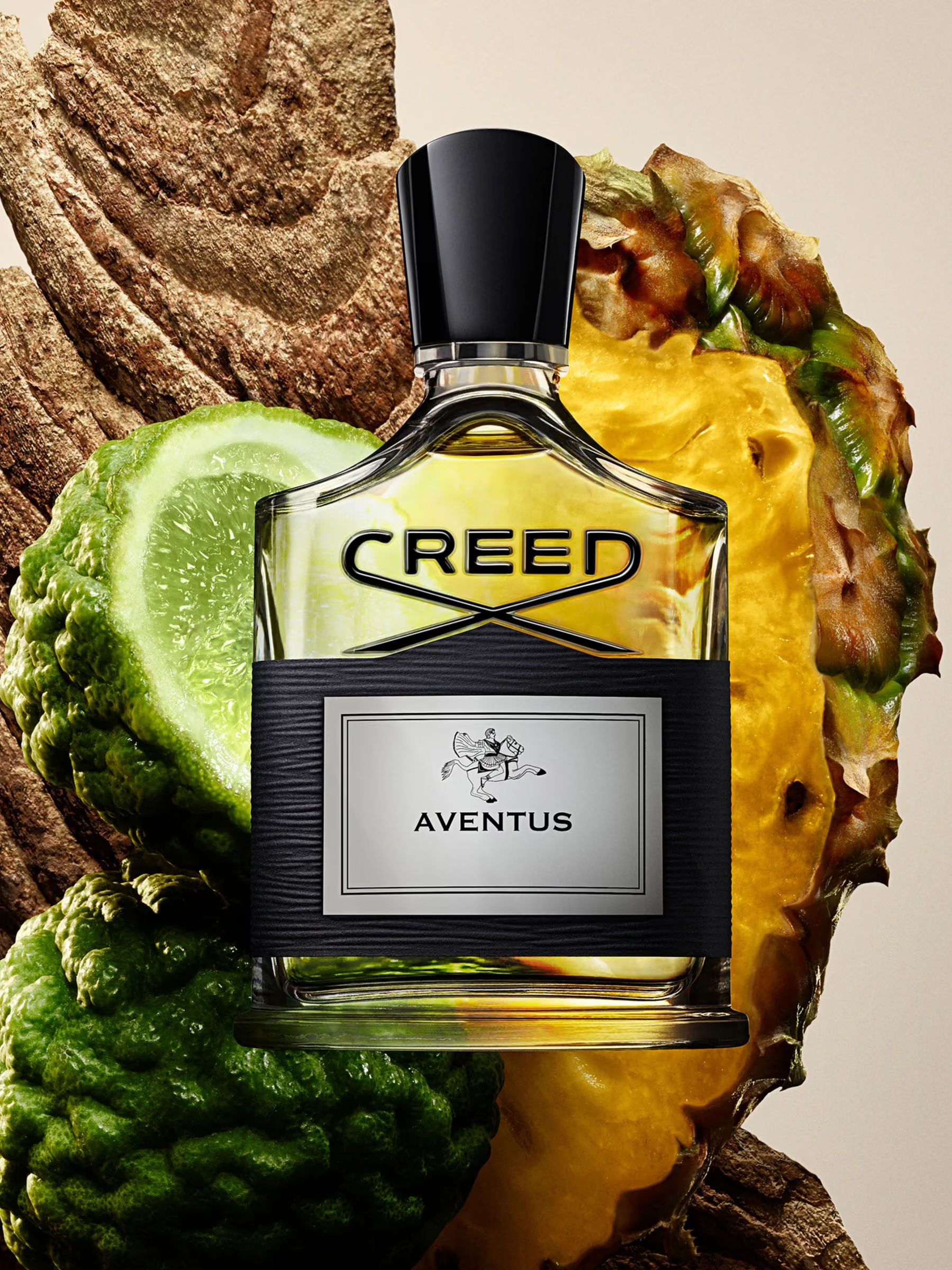
Creed Aventus is the standing example, because it is probably the most counterfeited fine fragrance in the world. Its silhouette and its smoky-pineapple signature are so recognisable that faking it is profitable, and it is faked at every level of competence — from obviously wrong bottles to packaging that fools people who have owned the real thing. That is precisely why it is worth separating from the previous two categories. Nobody is defrauded by a Lattafa bottle that says Lattafa. People are defrauded every day by a bottle that says Creed and is not.
Here is the distinction in a sentence you can carry: judge by the label, not by the resemblance. Does the product claim to be someone else? If yes, it is counterfeit regardless of quality. If no, it is a perfume competing on its own terms, and your only question is whether you like it and think it is worth the money.
A second, quieter point. Enthusiast culture treats “dupe” as a badge — proof of thrift and knowledge. Fair enough. But an inspired-by is generally an approximation of a direction, not a replica of an experience. Materials, concentration and quality of the raw ingredients differ, and so do longevity and the way a scent evolves across a day. Some inspired-by perfumes are genuinely excellent. Almost none are indistinguishable, and the honest reviewers on Fragrantica and Basenotes tend to say so plainly.
To be clear about the position taken in this journal: this is not an argument that you should buy an imitation instead of an original, and it is not an argument that the imitation is the smart move. It is an argument that “dupe” and “fake” are not synonyms, and that pretending they are makes buyers worse at spotting the one that actually matters. The practical defences — packaging, batch codes, atomiser behaviour, how the juice moves over hours, and who is still answering next month — are set out in how to spot original perfume and in what a bottle photo cannot prove.
If you want the original of a famous name, the only real protection is a chain of people you can question. Not a certificate image pasted into a chat, not a hologram, not a photograph. A conversation with someone who will still be reachable after the parcel arrives.
That conversation is available: message Ahmad or Khaled on WhatsApp, or open the contact page and ask.